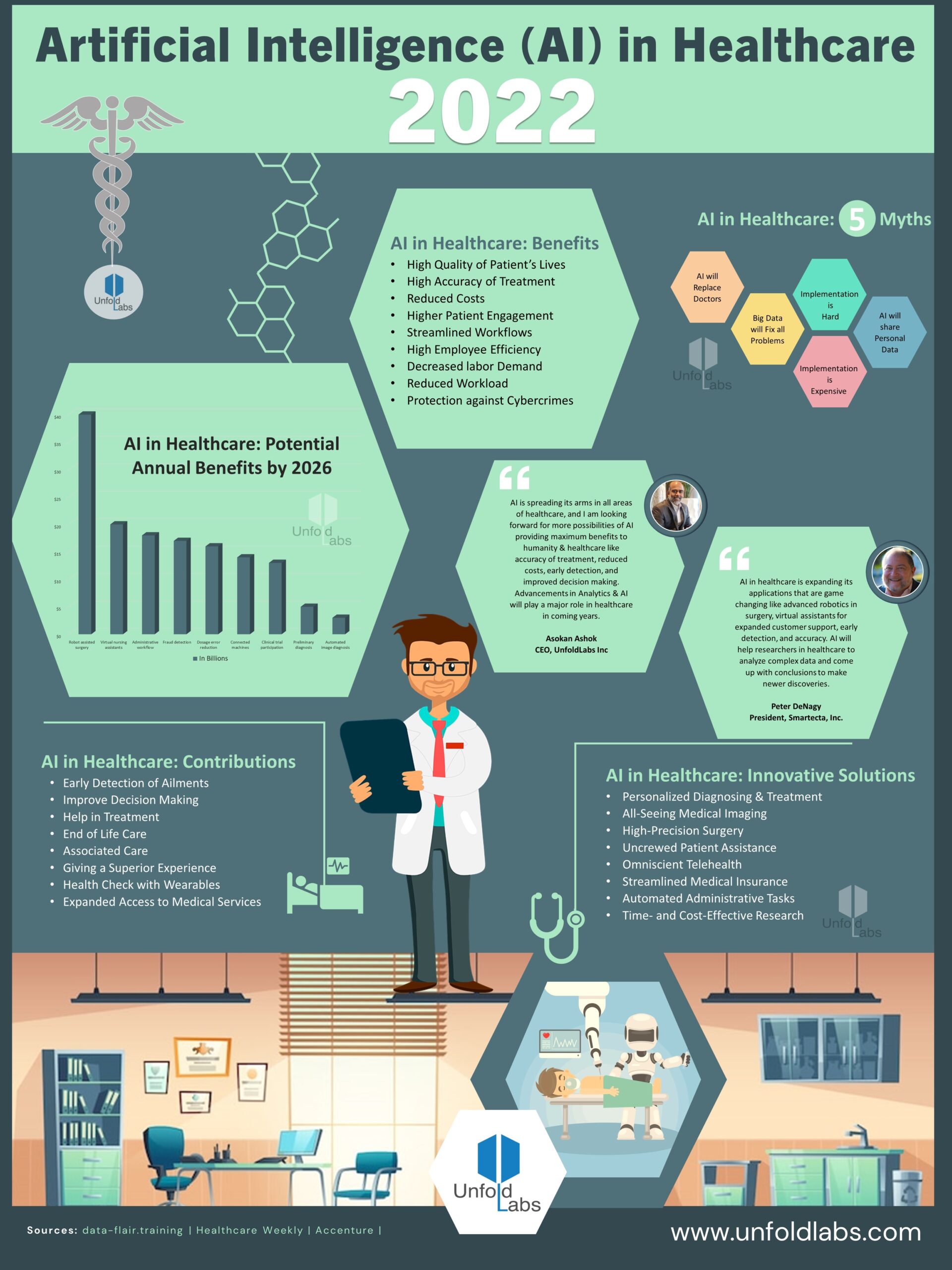
Introduction
The integration of artificial intelligence (AI) into healthcare is revolutionizing the medical field, enhancing diagnostic capabilities, treatment plans, and patient outcomes. As the healthcare industry faces unprecedented challenges, including rising costs and an aging population, AI presents innovative solutions that can improve efficiency and patient care. Understanding how AI is being utilized in healthcare is crucial for stakeholders, including patients, providers, and policymakers.
Current Applications of AI in Healthcare
AI technology is making a significant impact in various areas of healthcare. From predictive analytics used for identifying patients at risk of developing certain conditions to natural language processing (NLP) that assists in documenting patient information, the applications are vast.
One notable example is the use of AI in diagnostic imaging. AI algorithms can analyze images from X-rays, MRIs, and CT scans to identify conditions such as tumors and fractures with a high degree of accuracy. According to a study published in the journal ‘Nature’, AI can outperform human radiologists in certain diagnostic tasks, leading to earlier detections and better patient outcomes.
Additionally, AI-driven platforms are streamlining administrative tasks, reducing the burden on healthcare professionals. These systems can automate scheduling, billing, and coding, allowing providers to focus more on patient care rather than paperwork.
Challenges and Ethical Considerations
Despite the benefits, the integration of AI in healthcare also raises important challenges and ethical considerations. Data privacy is a significant concern, as healthcare organizations must handle sensitive patient information responsibly. Implementing robust cybersecurity measures and complying with regulations like HIPAA is essential.
Moreover, there are concerns about bias in AI algorithms, which can lead to unequal treatment outcomes for certain patient demographics. Ensuring that AI systems are trained on diverse datasets is vital in minimizing these issues and guaranteeing equitable care.
Conclusion
The potential of AI in healthcare is immense, promising to reshape the landscape of medical practice and patient experiences. As technology continues to evolve, ongoing research, rigorous testing, and public engagement will be necessary to address ethical and practical concerns. By fostering an inclusive dialogue around AI in healthcare, we can harness its power to improve patient care, reduce costs, and enhance overall health outcomes. The future of medicine is not only about technological advancement but also about ensuring that these innovations benefit everyone.