Introduction
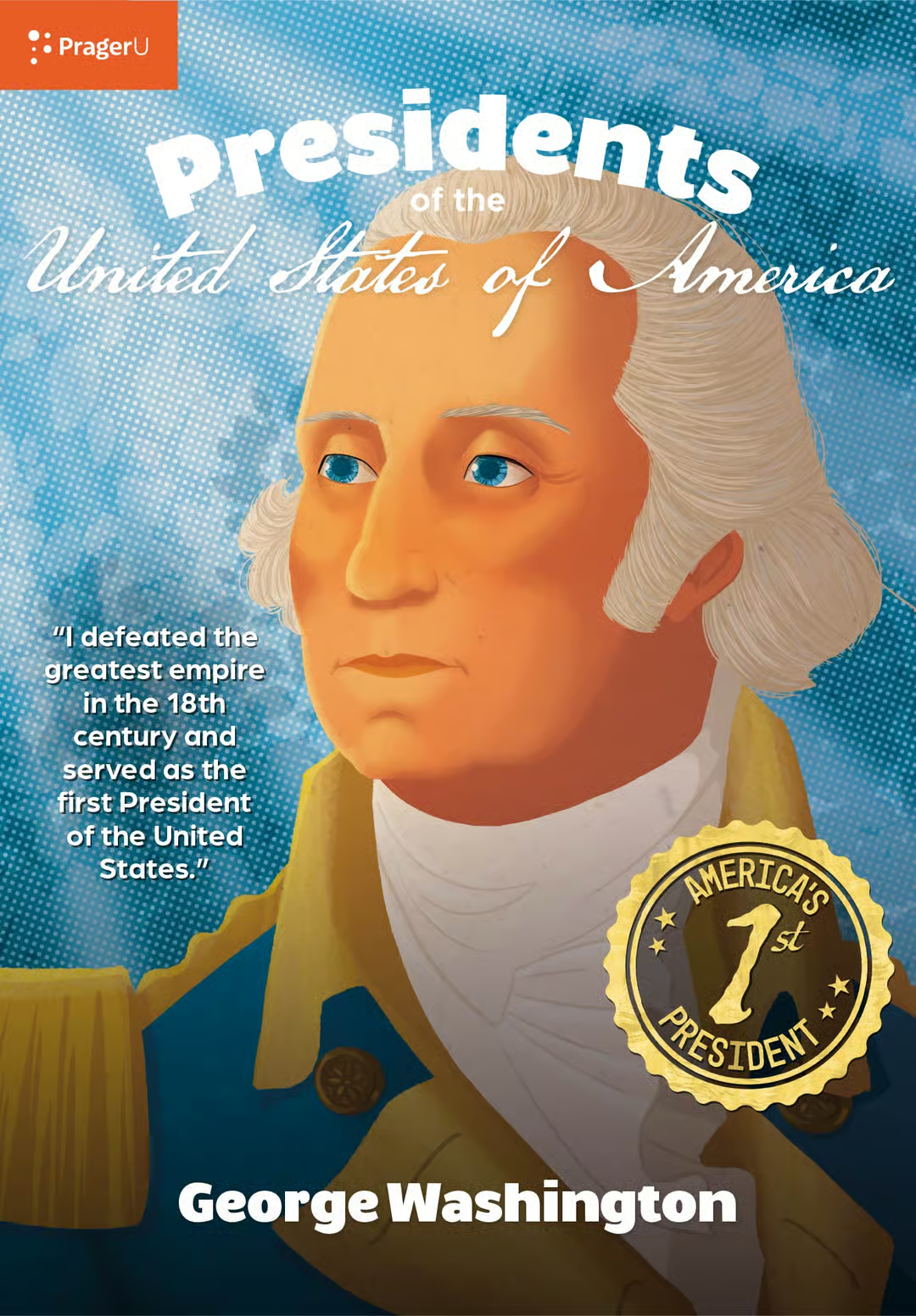
George Washington, often referred to as the ‘Father of His Country,’ is a pivotal figure in American history. His leadership during the Revolutionary War and his role in the establishment of the United States serve as lasting legacies that continue to influence the nation today. Understanding Washington’s contributions is essential not only for historical context but also for appreciating the democratic values that the United States upholds.
Early Life and Revolutionary War
Born on February 22, 1732, in Westmoreland County, Virginia, Washington grew up in a plantation family. He became involved in colonial military duties during the French and Indian War, which laid the groundwork for his future leadership. By the 1770s, tensions between the colonies and British forces escalated, leading to the Revolutionary War. Washington was appointed Commander-in-Chief of the Continental Army in 1775, where he showcased remarkable resilience and strategy, notably in his victory at the Siege of Yorktown in 1781.
Presidency and Legacy
Following the war, Washington was unanimously elected the first President of the United States in 1789. He set numerous precedents that shaped the executive office, including the formation of a Cabinet and the decision to step down after two terms. His Farewell Address emphasized unity, warned against political factions, and called for the avoidance of permanent foreign alliances. Washington’s commitment to a functioning democracy and his character have since served as an example for subsequent leaders.
Continued Relevance in Modern Times
Today, George Washington’s legacy remains relevant as debates over leadership, national identity, and democracy persist. His thoughts on governance and power still resonate, encouraging leaders to prioritize the well-being of their citizens above partisan interests. Recent initiatives, such as the renovation of the Washington Monument and efforts to educate the public about his impacts through museums, show that his legacy is actively being preserved and examined.
Conclusion
George Washington’s contributions to the United States are foundational and continue to be studied and revered. As future generations confront contemporary challenges to democracy and governance, Washington’s principles of integrity, leadership, and commitment to country serve as vital lessons. By understanding his role in shaping the nation, we can appreciate the established democratic values and work towards their ongoing preservation.