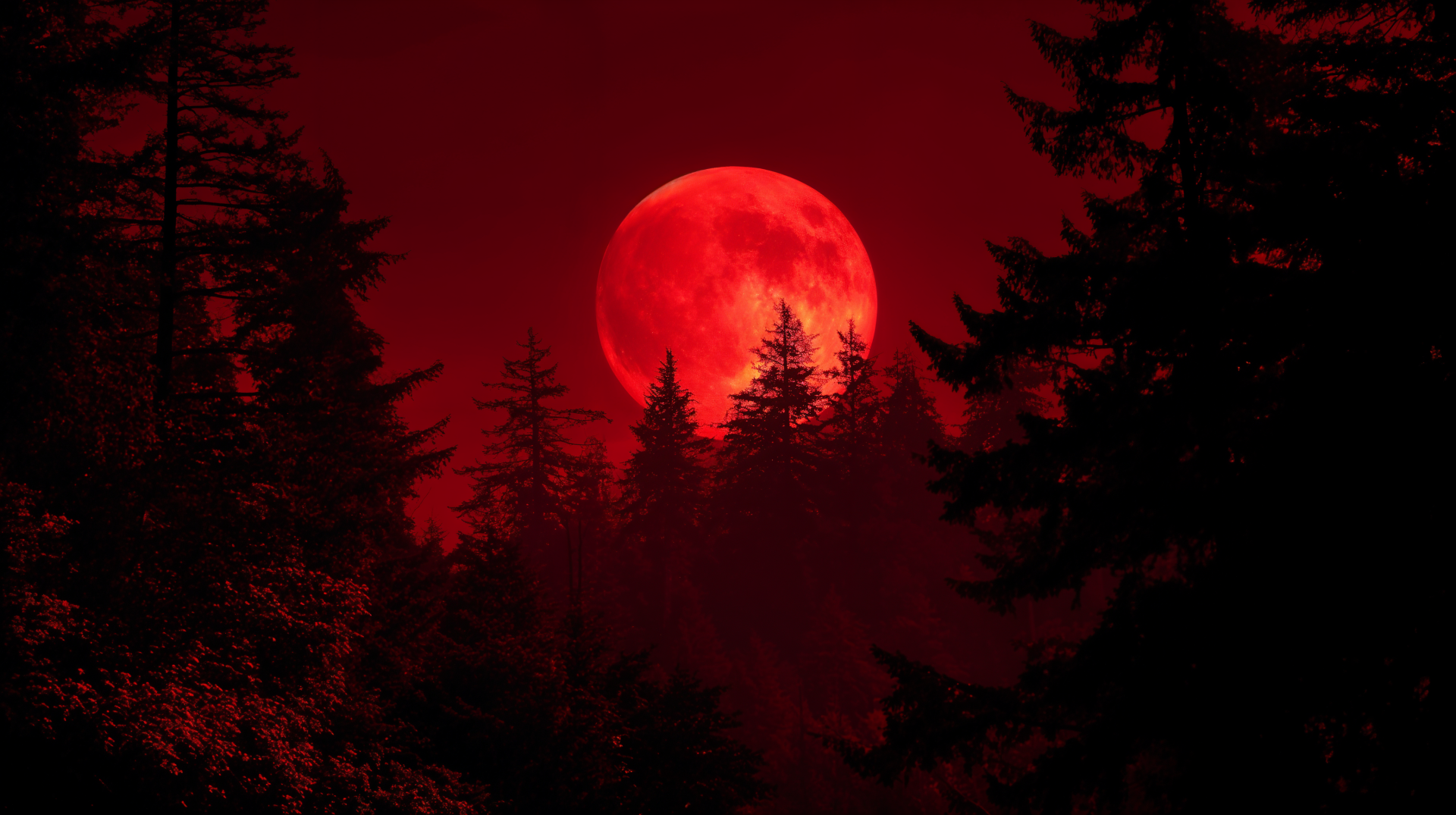
Introduction to the Crimson Moon
The crimson moon, often referred to as a ‘blood moon’, occurs during a total lunar eclipse when the Earth passes directly between the Sun and the Moon. This rare celestial event transforms the moon into a striking reddish hue, captivating observers worldwide. With events such as the recent eclipse on October 28, 2023, the crimson moon has garnered substantial attention, highlighting its importance in both scientific and cultural contexts.
Occurrence and Visibility
The phenomenon of a crimson moon arises due to Rayleigh scattering, the same effect that causes sunsets to appear red. During a total lunar eclipse, the Earth’s atmosphere filters out blue light and allows red wavelengths to pass through, resulting in the moon’s distinctive color. The 2023 crimson moon was visible in North America, parts of Europe, and Asia, bringing stargazers and photographers out in droves to witness the spectacle.
Cultural Significance
Throughout history, the crimson moon has been steeped in myth and significance across various cultures. For Native American tribes, such as the Lakota, the blood moon symbolized times of great change or upheaval. In other civilizations, it was believed to signal bad omens or significant events. As interest in astronomy and celestial events grows in contemporary society, the crimson moon has become a powerful metaphor in literature and art, representing transformation and renewal.
Recent Events and Observations
The most recent crimson moon occurrence was on October 28, 2023, during which many cities hosted viewing parties and educational seminars to discuss lunar phenomena. NASA and other astronomical organizations took the opportunity to educate the public on the science behind eclipses, promoting interest in space science and exploration. Social media platforms lit up with stunning photographs and videos, showcasing the brilliance of the crimson moon from various parts of the globe.
Conclusion: The Continuing Fascination with the Crimson Moon
As we witness the natural beauty and scientific rarity of the crimson moon, it serves as a reminder of our place in the universe. Future occurrences of this celestial event are expected, with the next blood moon set for March 14, 2025. Observing such phenomena not only enriches our understanding of astronomy but also unites people across cultures through shared experiences. Whether viewed through the lens of science or cultural lore, the crimson moon continues to ignite curiosity and wonder among humanity.