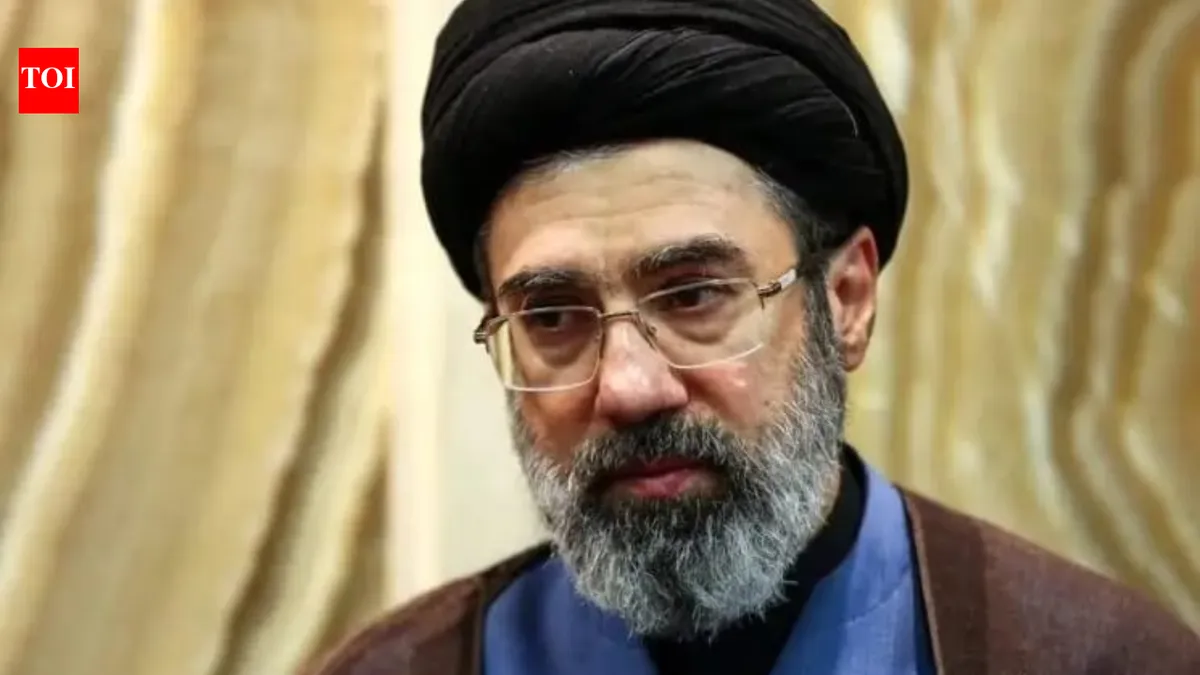
Who is Mojtaba Khamenei?
Mojtaba Khamenei is the son of the late Supreme Leader Ali Khamenei and has emerged as a significant figure in the wake of his father’s death. Born on September 8, 1969, in Mashhad, Iran, he has been viewed as a powerful member of Iran’s clerical elite, often operating behind the scenes.
He pursued his religious education at the Qom Seminary, where he developed strong connections with the Islamic Revolutionary Guard Corps (IRGC) and the Basij militia. His brief service in the IRGC during the Iran-Iraq War helped him forge lasting relationships within Iran’s political landscape, where he has acted as an influential adviser and gatekeeper in the Supreme Leader’s office.
Despite not holding an official government position, Mojtaba’s influence is derived from his control over key clerical and security networks, his support for hardline political figures, and his involvement in internal security matters, including the suppression of protests following the contested 2009 election.
Speculation about his potential succession to the leadership has intensified, especially after the deaths or sidelining of other prominent candidates. Critics, however, argue that he lacks the necessary clerical rank and legitimacy traditionally expected of a Supreme Leader, and that a dynastic succession could be contentious within Iran’s republican framework.
Moreover, investigations have linked Mojtaba to substantial financial networks and assets outside Iran, highlighting his economic influence beyond the political and religious spheres.
The Process of Selecting a Supreme Leader
The Supreme Leader of Iran is appointed through a constitutional process defined by the Islamic Republic’s system. Here’s how it works:
- Who Has the Authority? An 88-member clerical body, elected by the public every eight years, is responsible for appointing, supervising, and if necessary, dismissing the Supreme Leader.
- What Happens Immediately After the Leader’s Death? Under Article 111 of Iran’s Constitution, a three-person interim council, consisting of the President, the head of the judiciary, and a senior cleric from the Guardian Council, assumes responsibilities until a new Leader is chosen.
- How the Successor Is Selected The Assembly of Experts convenes urgently to review candidates who must be politically and religiously qualified, capable of leadership under Iran’s Islamic system, and must receive a majority vote internally.
- Behind-the-Scenes Power Dynamics While the Assembly makes the formal decision, the IRGC holds significant informal influence, and intense negotiations occur among political factions.
- Possible Types of Successors Analysts often discuss potential successors, including a hardline cleric aligned with the security establishment or a more politically experienced figure.
- How long does it take? Constitutionally, the process should be as swift as possible, likely taking days to weeks, as Iran has mechanisms in place for succession.
How was Ayatollah Ali Khamenei picked in 1989?
The selection process for Ayatollah Ali Khamenei as Supreme Leader in 1989 was remarkably swift. Following the death of Ruhollah Khomeini, the Assembly of Experts convened the next day to choose a new leader. Although the constitution required the leader to be a top-ranking cleric, a consensus candidate was not immediately clear.
Ultimately, the Assembly voted for a single leader, electing Ali Khamenei despite his not meeting the highest clerical rank at the time. His selection was bolstered by support from influential figures, and a subsequent constitutional referendum removed the marjaʿ requirement, solidifying his position. This rapid transition ensured political stability during a critical period for the Islamic Republic.
As Iran navigates this leadership transition, the implications of Mojtaba Khamenei’s potential rise to power will be closely monitored, both domestically and internationally.