Iranian President Masoud Pezeshkian Issues Apology Amid Regional Tensions
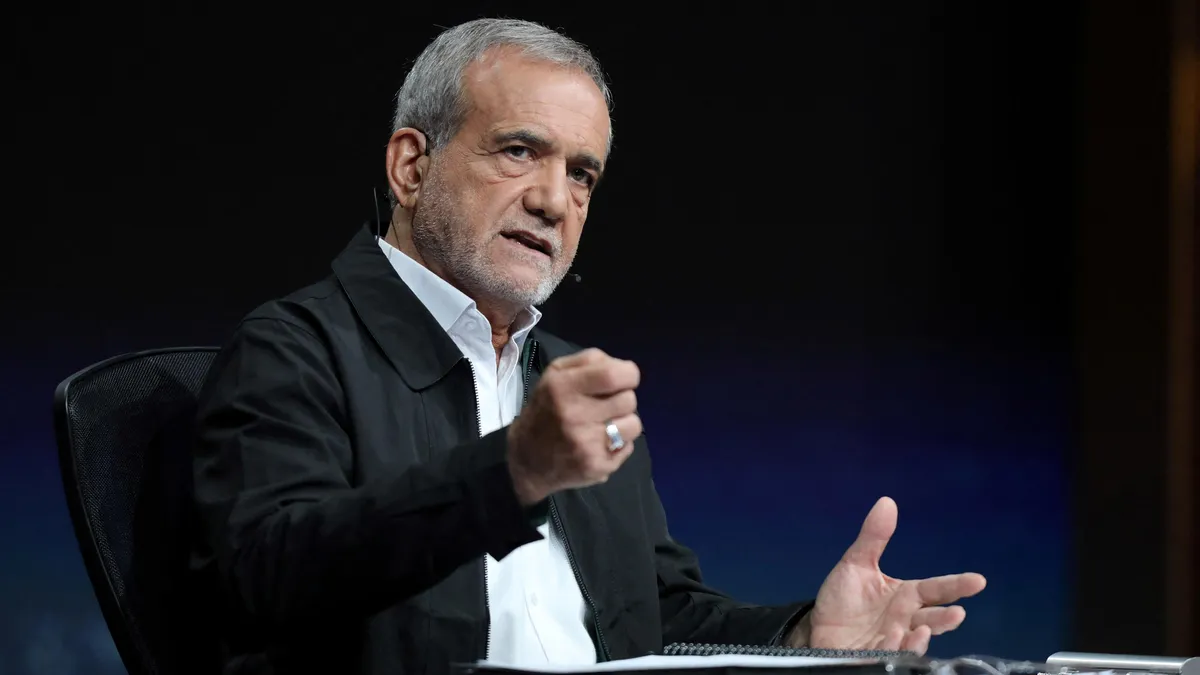
On March 8, 2026, Iranian President Masoud Pezeshkian publicly apologized to neighboring countries for recent military strikes attributed to Iran’s Islamic Revolutionary Guard Corps (IRGC). In his statement, Pezeshkian emphasized that Iran has no intention of invading other nations unless provoked, marking a significant moment in the ongoing regional conflict.
Pezeshkian’s remarks came in the wake of escalating tensions, particularly following a series of retaliatory strikes on US air combat centers. The Iranian leadership has faced mounting criticism domestically, with some hardliners expressing discontent over Pezeshkian’s conciliatory tone. The judiciary chief, Gholam Hossein Mohseni-Ejei, condemned the apology, asserting that retaliatory actions would persist despite the president’s statements.
In a broader context, the Iranian Parliament speaker, Mohammad Bagher Ghalibaf, pointed to the presence of US military bases in the region as a significant barrier to peace. This sentiment reflects a widespread belief among Iranian officials that foreign military involvement exacerbates regional instability. Pezeshkian’s statement, however, indicated a desire to resolve conflicts through diplomatic channels, a shift from the more aggressive postures often seen in Iranian rhetoric.
The backdrop of Pezeshkian’s apology is the ongoing turmoil following the death of Supreme Leader Ayatollah Ali Khamenei, which has led to a power-sharing arrangement among Iran’s leadership. This transition has created a complex political landscape, with various factions vying for influence and control. The conflict has resulted in significant casualties, with reports indicating that at least 1,230 individuals have died in Iran due to the ongoing violence.
Moreover, the humanitarian toll of the conflict has been severe, with Iran’s UN ambassador reporting that 1,332 Iranian civilians have been killed in US-Israeli air strikes. The US Central Command has confirmed over 3,000 strikes on targets within Iran during Operation Epic Fury, further complicating the situation. In this context, Pezeshkian’s call for diplomacy may be seen as an attempt to mitigate the fallout from these military actions.
In response to Pezeshkian’s statements, hardliners within Iran have voiced strong opposition. Hamid Rasai, a prominent figure among the hardliners, criticized the president’s approach as “unprofessional, weak and unacceptable.” This backlash highlights the internal divisions within Iran’s political landscape, where differing views on foreign policy and military engagement often clash.
Pezeshkian also addressed former US President Donald Trump’s demands for unconditional surrender, dismissing them as a “dream that they should take to their grave.” This remark underscores the ongoing tensions between Iran and the United States, which have been characterized by hostility and mutual distrust for decades.
As the situation continues to evolve, the Iranian leadership is under pressure to navigate a path that balances internal dissent with the need for stability in the region. While Pezeshkian’s apology may signal a willingness to engage in dialogue, the realities of the ongoing conflict and the presence of foreign military forces complicate the prospects for peace. Details remain unconfirmed regarding the potential for diplomatic resolutions as Iran grapples with its internal and external challenges.