Art and Politics Intersect in Santiniketan
“I did not know if Chief Minister Mamata Banerjee was ‘angry’ with her,” remarked Droupadi Murmu, India’s first tribal President, during her address at the International Santhal Conference held at Visva-Bharati University in Santiniketan on March 7, 2026. This statement encapsulated the tension surrounding her visit, particularly given the last-minute change of venue due to a lack of permissions.
Murmu’s presence at the conference was significant, as it underscored the intersection of cultural heritage and political representation in India. The event brought together scholars and artists to discuss the contributions of the Santhal community to Indian culture, a topic that resonates deeply with Murmu’s own background.
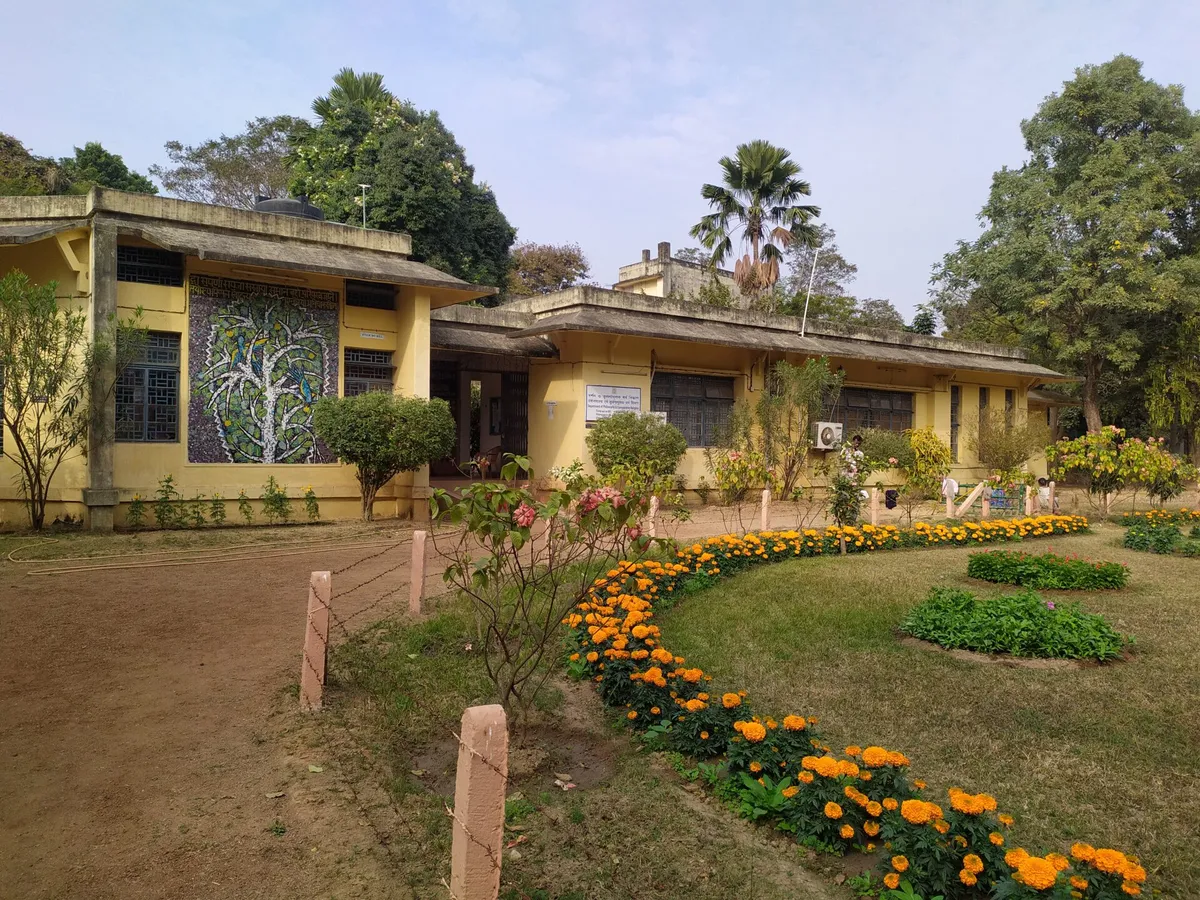
The conference’s setting in Santiniketan, a place renowned for its artistic legacy, is particularly poignant. Founded by Rabindranath Tagore, the university has been a hub for progressive thought and creativity. It was here that Nandalal Bose, a pivotal figure in Indian art, staged a visual coup at a political gathering in Haripura, Gujarat, in 1938, creating 77 posters that depicted the life of the soil for the masses. These works aimed to make art accessible and to decolonize the Indian mind.
As part of the ongoing celebration of Bose’s legacy, an exhibition titled ‘Colours of Swades’ will run at the National Gallery of Modern Art from March 9 to April 9, showcasing how technology, particularly Artificial Intelligence, can reinterpret Bose’s works. Nidhi Choudhari, a curator of the exhibition, noted, “The Haripura panels were never intended to be museum objects in the conventional sense. Technology is a tool of interpretation. It helps visitors step closer into the world Bose imagined.”
Murmu’s disappointment over the absence of the Chief Minister and senior ministers during her visit reflects broader issues of political protocol and respect for constitutional offices. She emphasized, “Protocol is not a matter of political convenience. It reflects respect for constitutional offices.” This statement highlights the importance of political decorum in a democratic society.
The International Santhal Conference not only serves as a platform for discussing the rich cultural heritage of the Santhal community but also acts as a reminder of the ongoing challenges faced by tribal leaders in India. Murmu’s remarks and the context of her visit underscore the need for greater representation and acknowledgment of tribal voices in the political landscape.
As the exhibition and conference unfold, the interplay between art, politics, and cultural identity continues to be a focal point in Santiniketan, a place where the past and present converge in the pursuit of a more inclusive future.