Incident Overview
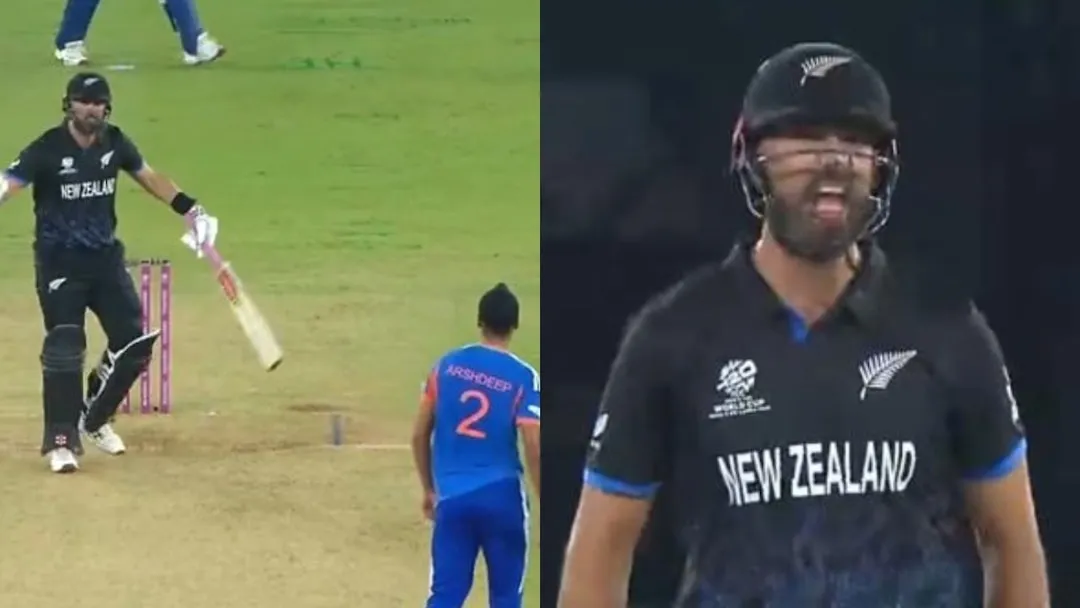
In a dramatic turn of events during the T20 World Cup 2026 final held at the Narendra Modi Stadium in Ahmedabad on March 8, Daryl Mitchell was struck by a throw from Indian player Arshdeep Singh. This incident occurred in the 11th over of the match, which was marked by high tensions as India had set a formidable score of 255 runs.
Immediate Circumstances
The throw from Arshdeep Singh hit Daryl Mitchell, leading to an immediate reaction from the New Zealand player, who was visibly furious. Suryakumar Yadav, the captain of the Indian team, intervened to calm Mitchell down amidst the escalating emotions on the field. At the time of the incident, New Zealand had lost five wickets, and Mitchell had scored 17 runs off 11 balls before his dismissal.
The T20 World Cup final was played under immense pressure, with India achieving the highest ever T20 World Cup final score of 255-5. New Zealand struggled in response, ultimately scoring only 159 runs, which resulted in a 96-run victory for India. The match was not only significant for its scoreline but also for the intensity it brought out in the players.
Reactions and Aftermath
Initially, Arshdeep Singh refused to apologise for the incident, which was described as a brief flashpoint that was resolved quickly. However, after the over, he did extend an apology to Mitchell, stating, “I just apologised to him, I didn’t mean to hit him intentionally.” This comment highlighted the unintentional nature of the incident, which Arshdeep later referred to as ‘reverse swing’.
Broader Implications
The incident sparked discussions about player conduct and the pressures of high-stakes matches. One observer noted, “These are the moments that can push a game away from pure cricket and into confrontation.” Such moments can overshadow the sporting spirit that is often celebrated in cricket.
Official Statements
Commentators and analysts weighed in on the incident, with one remarking that Arshdeep throwing the ball towards Daryl Mitchell and hitting him was “not nice” and deemed “very unnecessary.” The incident raised questions about sportsmanship and the emotional toll that competitive matches can exert on players.
As the dust settles on the T20 World Cup final, the focus remains on the match’s outcome and the implications of the incident involving Daryl Mitchell and Arshdeep Singh. While the match concluded with India as the champions, the brief confrontation serves as a reminder of the fine line between competition and confrontation in sports.