What does Kartik Kannan’s post reveal about nightlife in Ahmedabad?
Kartik Kannan’s viral post comparing the nightlife of Ahmedabad and Bengaluru raises the question: Is Ahmedabad becoming the new nightlife hub of India? Kannan’s observations suggest that Ahmedabad offers a lively atmosphere that is both safe and enjoyable for late-night outings, contrasting with his experiences in Bengaluru.
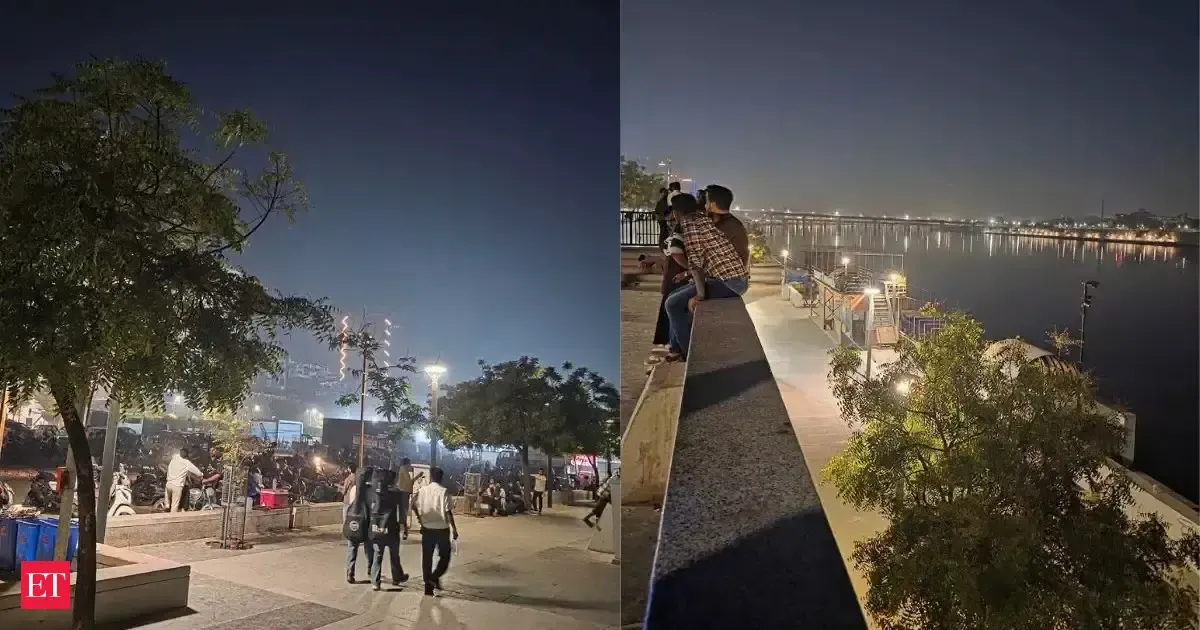
In his post, Kannan praised Ahmedabad for its vibrant scene at 1 AM, stating, “Ahmedabad is buzzing for 1 AM with a very festive feel.” He expressed a desire for similar spaces in Bengaluru where individuals could enjoy the nightlife without the looming presence of police. His post resonated with many, garnering nearly 3.9 thousand likes and being viewed by over 336.7K users.
What sparked the debate?
The post ignited a broader discussion on nightlife and safety in Indian cities. Many netizens echoed Kannan’s sentiments, agreeing that Ahmedabad is a safe and enjoyable city, particularly for families. Users commented on the cultural vibe of Ahmedabad, noting its family-friendly atmosphere and a lesser focus on alcohol consumption compared to other cities.
In contrast, some users defended Bengaluru, pointing out that it still has vibrant areas for nightlife. They mentioned specific locations like Brigade Road, which were once known for their lively night scenes. This exchange highlighted the differences in nightlife culture between the two cities, with users sharing personal experiences and preferences.
Visual evidence of Ahmedabad’s nightlife
Kannan supported his claims by sharing photos of Ahmedabad taken around 1 AM, illustrating the city’s bustling streets and lively eateries. One user remarked, “Ahmedabad is superb. The city is awake the entire night and so many good places to eat even at midnight.” This visual evidence contributed to the conversation, showcasing a city that thrives after dark.
The discussion also included comparisons of public spaces in both cities, with users reflecting on how these environments influence nightlife. While Ahmedabad’s public spaces seem to foster a sense of safety and enjoyment, Bengaluru’s nightlife has faced challenges that some believe detract from its vibrancy.
What lies ahead?
As the debate continues, it remains to be seen how cities like Bengaluru will adapt to the changing perceptions of nightlife. Kannan’s post has not only highlighted the strengths of Ahmedabad’s nightlife but has also prompted a reevaluation of what urban nightlife should look like in India. The ongoing discussions may lead to changes in policies or cultural shifts in how cities approach late-night activities.
Details remain unconfirmed regarding any potential initiatives that might arise from this discourse. However, the conversation initiated by Kannan’s post underscores the importance of nightlife in urban culture and the varying experiences individuals have across different cities.