Political Landscape Before the Election
Before the recent election in Baden-Württemberg, the political landscape was characterized by a strong presence of traditional parties, with the AfD struggling to gain significant traction. The party had previously secured only 9.7% of the votes in the 2021 election, which was viewed as a modest performance compared to its aspirations. Markus Frohnmaier, a prominent figure within the AfD, had been serving as a Bundestag member since 2017, yet the party’s influence in the region remained limited. Frohnmaier, who has been described as having ‘Russia proximity,’ was poised to run for Ministerpräsident, but there were doubts about his electability given his absence from the ballot for the 7.7 million eligible voters.
A Decisive Moment
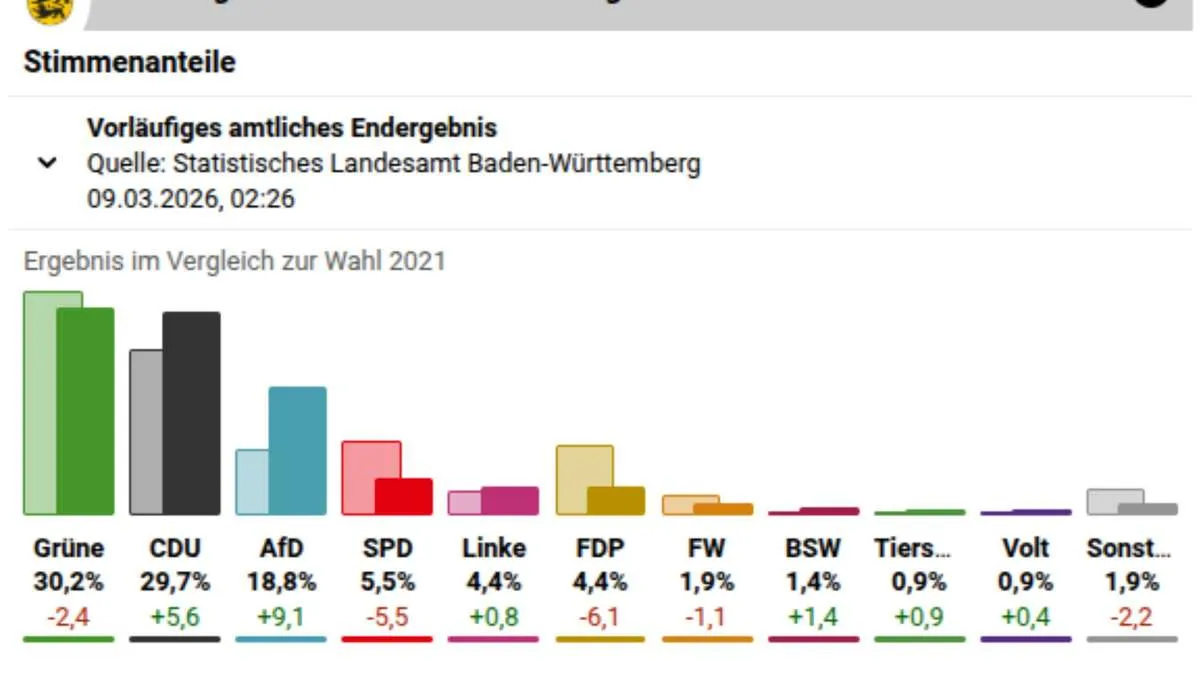
The 2026 Baden-Württemberg election marked a turning point for the AfD, as the party achieved 18.8% of the votes, reflecting a significant increase of 9.1% from the previous election. This surge in support was seen as a decisive moment for the AfD, positioning it to potentially become the largest opposition party in the state parliament. Frohnmaier’s candidacy, despite not being on the ballot, was a strategic move to capitalize on the party’s growing popularity. The results indicated a shift in voter sentiment, with Alice Weidel, the party’s leader, expressing satisfaction with the outcome, highlighting that it represented a doubling of their previous results.
Immediate Effects on the Parties Involved
The immediate aftermath of the election results saw Frohnmaier offering collaboration to the CDU’s Manuel Hagel, emphasizing the AfD’s self-identification as a ‘bürgerlich-konservative Partei.’ This outreach was indicative of Frohnmaier’s strategy to position the AfD as a viable alternative within the conservative spectrum of Baden-Württemberg politics. However, Hagel’s response was cautious, stating, “Für mich ist kein Amt der Welt so wichtig, dass ich mich mit Stimmen der AfD dort hineinwählen lasse,” which reflects the ongoing resistance from traditional parties to align with the AfD.
Expert Perspectives on the Shift
Political analysts have noted that the AfD’s rise in Baden-Württemberg is emblematic of broader trends in German politics, where right-wing populism has gained traction in recent years. The Baden-Württemberg Office for the Protection of the Constitution classifies the AfD as a right-wing extremist suspect, which complicates its acceptance within mainstream political discourse. Cem Özdemir, a prominent politician, articulated this concern, stating, “Was die AfD angeht, ist für mich völlig klar: Der Auftrag des Regierens ist, alles dafür zu tun, dass die AfD beim nächsten Mal schwächer ist.” This sentiment underscores the challenges the AfD faces in gaining legitimacy despite its electoral gains.
Frohnmaier’s Background and Controversies
Markus Frohnmaier’s background is notable; born in Romania and adopted by a German couple, he has risen to prominence within the AfD, co-founding the now-dissolved youth organization Junge Alternative. However, his tenure has not been without controversy, as he has faced accusations of nepotism regarding his wife’s employment. These factors contribute to the complex narrative surrounding his political career and the AfD’s positioning in Baden-Württemberg.
Looking Ahead
As the AfD prepares to navigate its role as a significant opposition force in the Baden-Württemberg parliament, the implications of its electoral success will be closely monitored. The party’s ability to maintain its momentum and address internal and external challenges will be crucial in shaping the future political landscape of the region. With Frohnmaier at the forefront, the AfD’s strategies and alliances will be pivotal in determining its influence moving forward.