Background on the Van Allen Probes
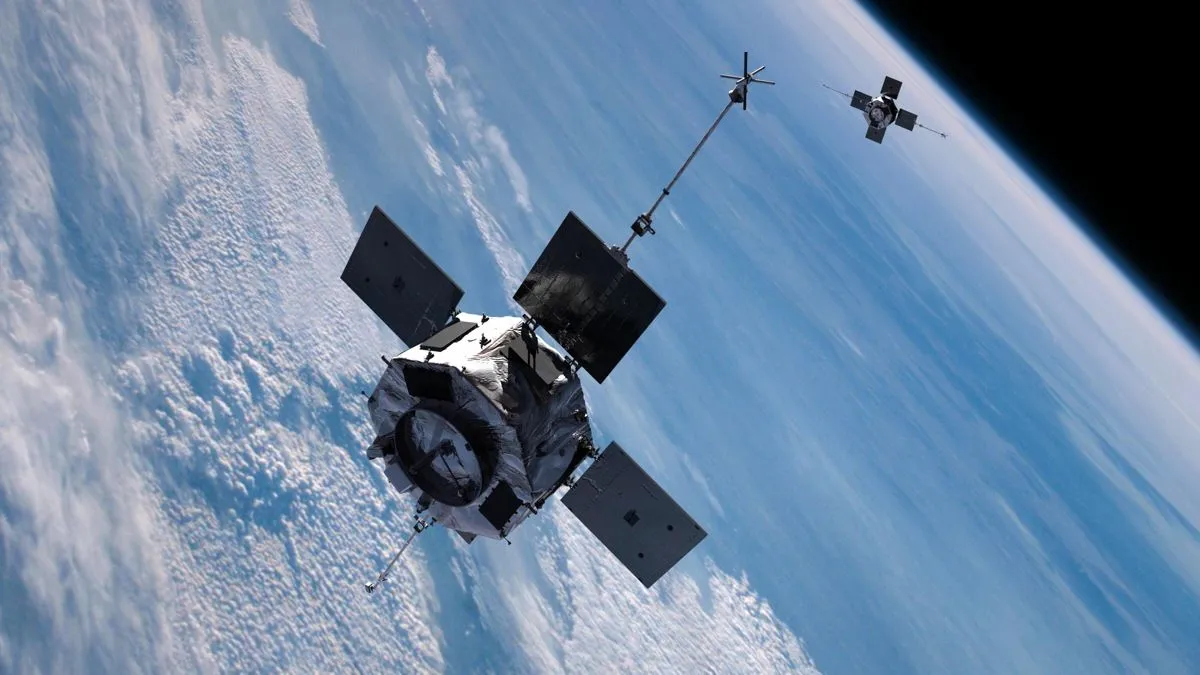
The Van Allen Probes, originally known as the Radiation Belt Storm Probes, were launched in August 2012 with the mission to study the radiation belts surrounding Earth. These satellites were designed to collect data about space weather and how it affects satellites, astronauts, and various systems on Earth, including communications and power grids. Initially, the mission was expected to last for two years, but it continued until 2019 when both probes were deactivated.
Breaking Development: Reentry of Van Allen Probe A
On March 11, 2026, at 6:37 a.m. EDT, Van Allen Probe A reentered the Earth’s atmosphere, marking the end of its nearly 14-year mission in orbit. The satellite, which weighed 1,323 pounds (600 kilograms), was monitored during its descent by NASA and the U.S. Space Force. NASA had anticipated that most of the spacecraft would burn up upon reentry, although some components might have survived.
Safety Concerns and Monitoring
NASA officials indicated that there was a 1-in-4,200 chance that the satellite would cause harm to anyone during its reentry. This low probability reflects the extensive monitoring and safety measures in place for satellite reentries, which are generally considered common and rarely pose a real danger to people on Earth. Experts have reiterated that such events are typically well-managed and pose minimal risk.
Scientific Contributions of the Van Allen Probes
Throughout its operational period, Van Allen Probe A, along with its twin, contributed significantly to our understanding of space weather. By collecting data on the radiation belts, scientists have been able to better predict how solar activity impacts various technologies and systems. This information is crucial for ensuring the safety of astronauts and the reliability of satellite operations.
Future Implications
As the satellite’s reentry was closely observed, NASA officials noted that reviewing archived data from the mission would continue to aid scientists in their studies. The insights gained from the Van Allen Probes are expected to enhance our understanding of space weather phenomena and their implications for both space and terrestrial systems.
Conclusion and Next Steps
While the reentry of Van Allen Probe A marks the end of its mission, the data collected over the years will remain invaluable for ongoing research. Observers and officials anticipate that further analysis of the mission’s findings will continue to inform future space missions and improve our preparedness for solar activity. Details remain unconfirmed regarding any surviving components from the satellite.