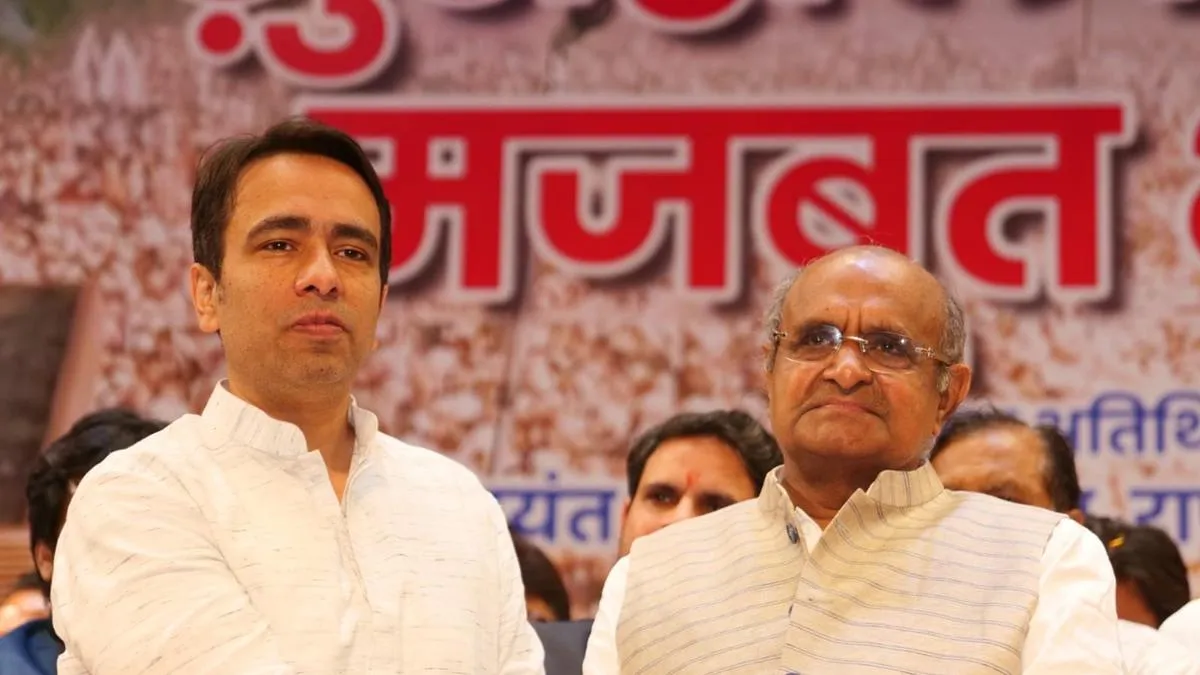
K.C. Tyagi’s recent political maneuver has sent ripples through the Indian political landscape. Until now, Tyagi was a prominent figure within the Janata Dal-United (JD(U)), where he served as the chief national spokesperson and national secretary general. His long-standing relationship with JD(U) and its leader, Nitish Kumar, had been a cornerstone of his political identity.
However, on March 17, 2026, Tyagi made a decisive move by resigning from the JD(U), a party he helped establish in 2001. Just five days later, he formally joined the Rashtriya Lok Dal (RLD) on March 22, 2026. This shift marks a significant change in his political trajectory, as he aims to focus on issues vital to farmers and the National Democratic Alliance.
Tyagi’s departure from JD(U) has raised eyebrows, especially given his assertion that he sees no difference between JD(U) and RLD, as both parties share similar ideologies. “I don’t see any difference between Lok Dal, RLD and JDU,” he stated, emphasizing his commitment to the interests of the downtrodden and agricultural communities.
His political roots trace back to the founding of the RLD in 1974, suggesting a return to his origins. Tyagi’s experience and historical ties with the party could bolster its influence in western Uttar Pradesh, a region critical for electoral success.
Experts suggest that Tyagi’s move could strengthen the RLD’s position within the broader political alliance, particularly in light of his extensive experience in political communication and strategy. “A strong Rashtriya Lok Dal in western Uttar Pradesh will give more strength to the alliance,” Tyagi remarked, indicating his vision for the party’s future.
As Tyagi transitions into his new role, the implications for both JD(U) and RLD are profound. His departure may weaken JD(U) in terms of public perception and support, while simultaneously enhancing RLD’s credibility and outreach.
Tyagi’s commitment to farmer welfare remains a central theme in his political agenda. He stated, “My commitment to the broader ideological points concerning the interests of the downtrodden, peasants and agriculturalists, including the deprived sections of society, remains as firm as ever.” This focus aligns with RLD’s historical advocacy for agrarian issues.
As the political landscape continues to evolve, the impact of K.C. Tyagi’s shift will be closely monitored, especially as parties prepare for upcoming elections. Details remain unconfirmed regarding the full ramifications of this change, but the urgency of the situation is palpable.