The wider picture
The Gen Z protests were a response to longstanding issues of economic hardship and governance in Nepal. These protests, which erupted in September 2025, led to a tragic loss of life, with 76 individuals killed, including at least 19 who died due to police firing on September 8, 2025. The unrest highlighted the frustrations of a younger generation demanding accountability and reform in a country grappling with political instability.
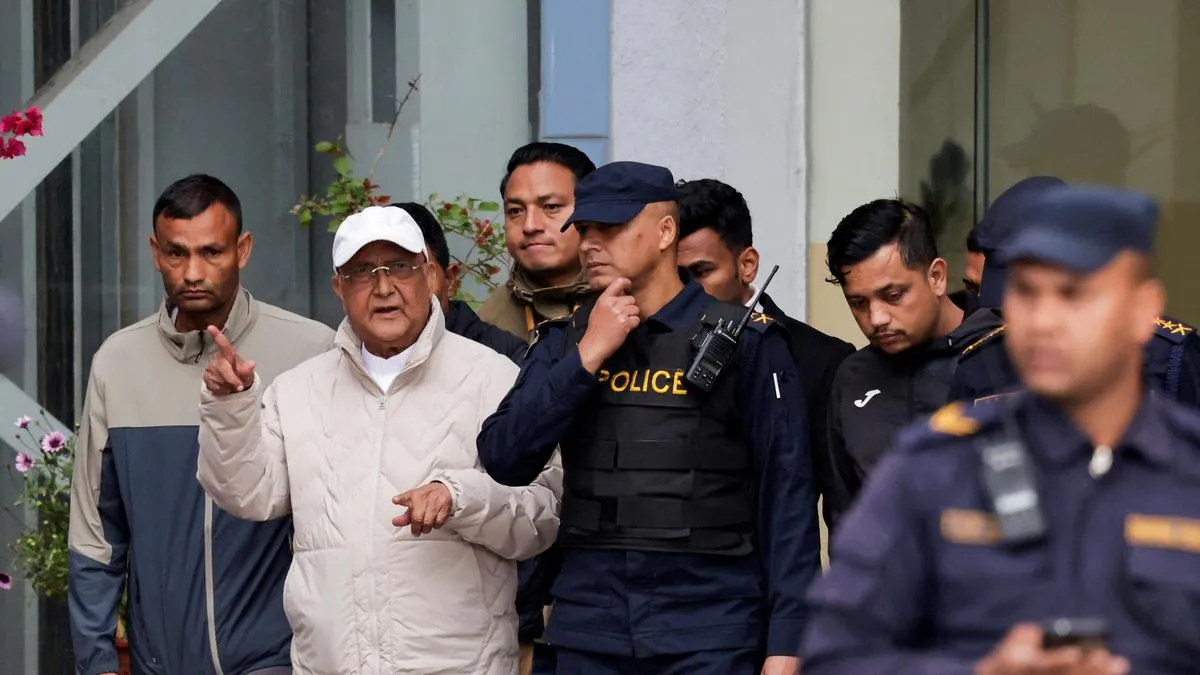
In a dramatic turn of events, K.P. Sharma Oli, the former Prime Minister of Nepal and leader of the Communist Party of Nepal (Unified Marxist–Leninist), was arrested on March 28, 2026, from his residence in Gundu, Bhaktapur. The arrest comes just one day after a new government led by Balendra Shah was sworn in, signaling a potential shift in the political landscape of Nepal.
Oli faces serious charges of culpable homicide stemming from the Gen Z protests, where a probe commission recommended his prosecution for negligent killings. Alongside him, Ramesh Lekhak was also arrested in Suryabinayak, Bhaktapur, as authorities move to hold accountable those deemed responsible for the violence that erupted during the protests.
Sudhan Gurung, the new Home Minister, stated, “A promise is a promise: No one is above the law,” emphasizing that the arrests signify the beginning of justice for the victims of the protests. He further remarked, “This is not revenge against anyone; this is the beginning of justice,” indicating a commitment to uphold the rule of law in the face of political turmoil.
However, Oli’s party has vehemently opposed the arrests, claiming they are illegal and politically motivated. Yogesh Bhattarai, a spokesperson for the Communist Party of Nepal (Unified Marxist–Leninist), declared, “We will protest in the strongest form as our chairman Oli has been arrested unconstitutionally and illegally.” This statement underscores the deep divisions within Nepal’s political sphere and the potential for further unrest.
As the situation unfolds, authorities have indicated that a decision regarding the custody of Oli and Lekhak will be made after the courts open on Sunday. Observers are keenly watching how the new government will navigate the challenges posed by these high-profile arrests and the ongoing demands for justice from the public.
In the wake of these developments, political analysts are divided on the implications for Nepal’s future. Hari Sharma, a political commentator, noted, “The youth demanded clean governance and accountability, but this must be achieved through the rule of law, not rule by law.” As the nation grapples with its past and looks towards a more accountable future, the coming days will be crucial in determining the trajectory of Nepal’s political landscape.
Details remain unconfirmed regarding the health status of K.P. Sharma Oli, who was taken to a hospital for a check-up following his arrest. As the situation continues to evolve, the eyes of the nation remain fixed on the unfolding drama that could reshape Nepal’s governance and political identity.