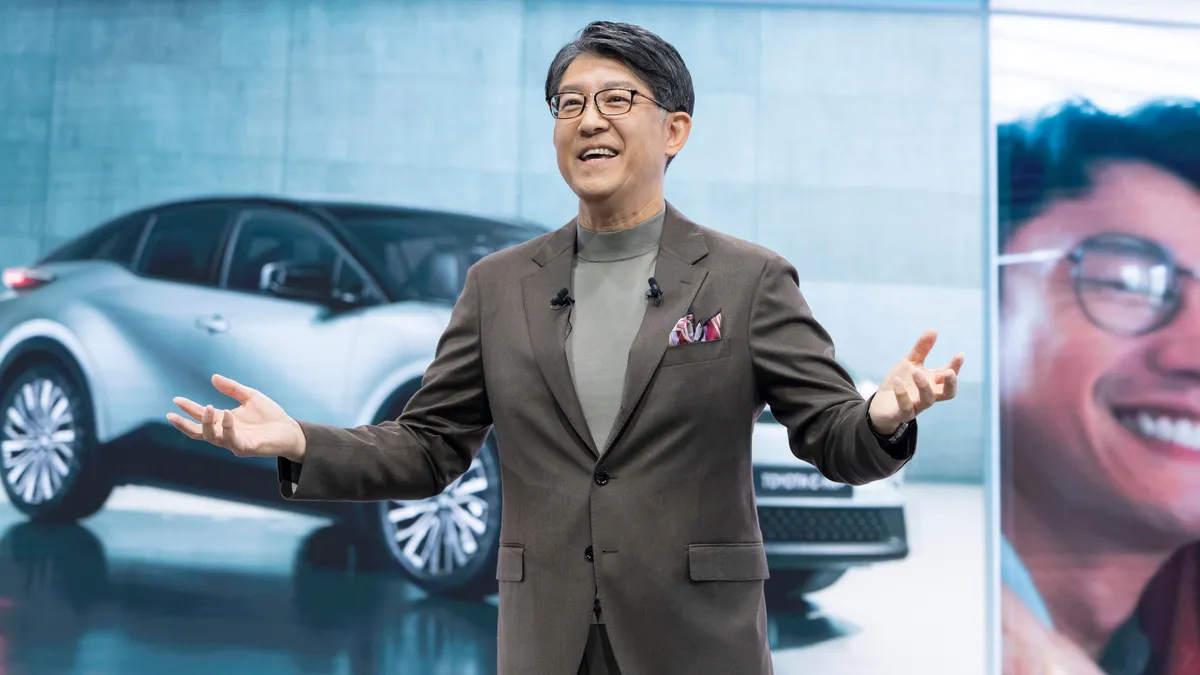
Toyota is facing pressures from rising competition in the automotive industry, particularly from Chinese EV makers. In a significant development, CEO Koji Sato has issued a stark warning to 484 of the company’s top suppliers, urging them to boost productivity to ensure their survival in an increasingly challenging market.
Sato stated, “Unless things change, we will not survive,” highlighting the urgency of the situation. He emphasized the necessity for suppliers to achieve faster throughput, lower scrap rates, and tighter quality controls. This warning is not merely a routine review but a serious call to action for suppliers to adapt to the evolving landscape.
The automotive industry is currently battling for survival, according to Sato, who pointed out that the pressure from competitors, especially in the electric vehicle sector, is mounting. His remarks come as Toyota prepares to announce its 2025 results, following a record delivery of 11,322,575 automobiles globally last year.
Sato’s warning is closely tied to Toyota’s 2026 production targets and the need to protect profit margins. Incoming CEO Kenta Kon echoed these sentiments, stating, “Each side drives the other to grow stronger,” reinforcing the collaborative effort required to meet these goals.
Furthermore, Sato’s call for measurable cost-per-vehicle cuts and defect reductions underscores a shift towards efficiency and cost control across the supply chain. He remarked, “To enable us to make more cars, we must step things up a gear in areas such as building quality into every process.” This reflects a broader strategy aimed at enhancing the company’s competitive edge in a rapidly changing market.
As the automotive landscape continues to evolve, observers are keenly watching how Toyota and its suppliers respond to this urgent call for action. The implications of Sato’s warning could reshape the dynamics of supplier relationships and the overall production strategy moving forward.