How it unfolded
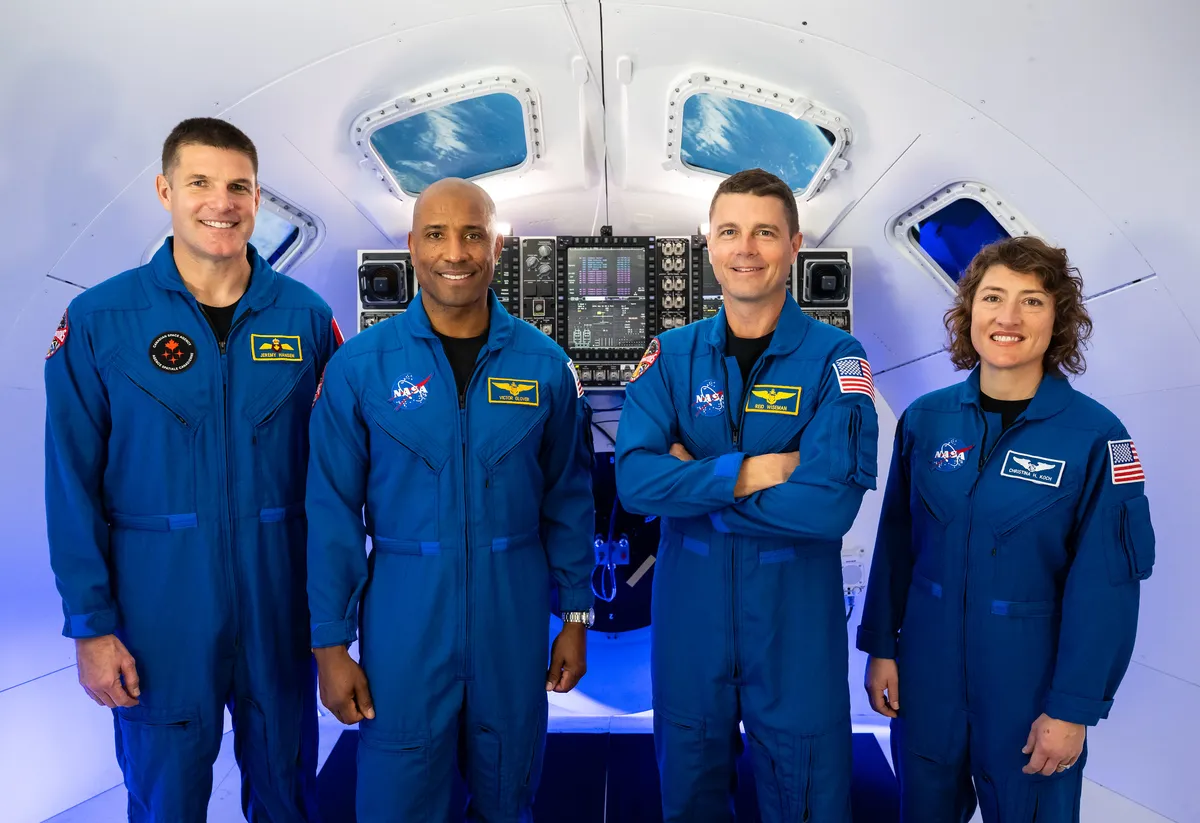
On April 1, 2026, at 6:35 p.m. EDT, NASA’s Artemis II mission lifted off from the Kennedy Space Center in Florida, marking a pivotal moment in space exploration. This mission is the first crewed flight of NASA’s Artemis program, which aims to return humans to the Moon and eventually to Mars. The crew consists of four astronauts: Reid Wiseman, Victor Glover, Christina Koch, and Jeremy Hansen, who are embarking on a journey that will last approximately 10 days.
The Artemis II mission is particularly significant as it represents the first time humans will travel beyond low Earth orbit since Apollo 17 in 1972, a gap of 50 years. The spacecraft, Orion, will perform a lunar flyby, traveling more than 400,000 kilometers to the Moon, but will not land on its surface. Instead, the crew will fly past the far side of the Moon, reaching a distance of 70,000 kilometers from the lunar surface.
As part of the mission, the astronauts will conduct manual piloting demonstrations and test life support systems for the first time with a crew on board. This is crucial for validating the Orion spacecraft’s systems and hardware for future deep space travel. The European Service Module (ESM) plays a vital role in this mission, providing essential life support and propulsion capabilities.
NASA Administrator Jared Isaacman emphasized the importance of the launch, stating, “Today’s launch marks a defining moment for our nation and for all who believe in exploration.” Meanwhile, NASA Associate Administrator Amit Kshatriya noted, “Artemis II is a test flight, and the test has just begun.” This mission is not just a step forward for NASA but also a collaborative effort involving the European Space Agency and Airbus, showcasing international cooperation in space exploration.
During the flyby, the crew will have the opportunity to photograph both the Moon and Earth, capturing images that will contribute to our understanding of space and inspire future generations. The mission’s success is critical as it sets the stage for subsequent missions, including Artemis III, which will involve in-orbit lander docking tests.
As the crew embarks on this historic journey, they will face extreme conditions, including re-entry temperatures of up to 2,500 degrees Celsius and speeds of 40,000 km/h during their return to Earth. The mission aims to validate the capabilities of the Orion spacecraft, ensuring that it can support future missions to the Moon and beyond.
With Artemis II, NASA is not only pushing the boundaries of human exploration but also reigniting global interest in space travel. The mission’s success could pave the way for future lunar landings and even manned missions to Mars, making it a significant milestone in the history of space exploration.