The release of the CUET PG 2026 answer key and response sheet marks a pivotal moment for candidates seeking admission to postgraduate programs in India. This development not only sets the stage for the upcoming admissions cycle but also underscores the importance of the examination in determining eligibility for prestigious institutions like Jawaharlal Nehru University (JNU).
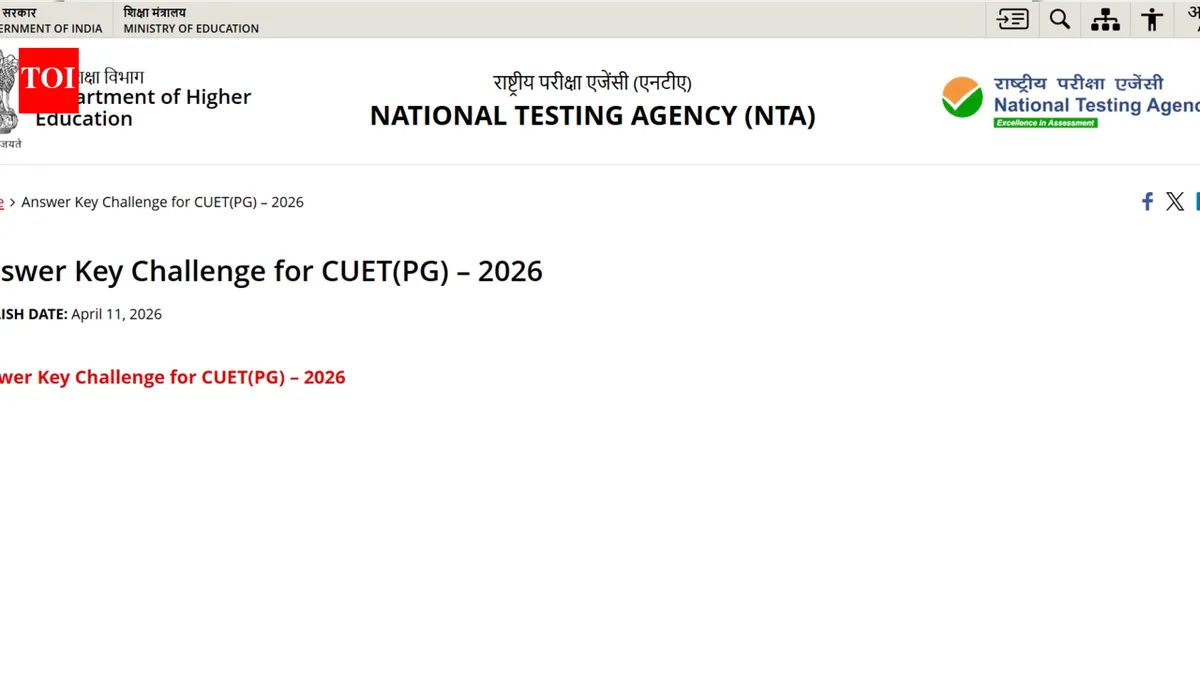
Candidates can access the answer key at exams.nta.nic.in, where they also have the opportunity to challenge any discrepancies. The objection fee is set at ₹200 per question, a non-refundable amount that candidates must pay to raise an objection. The challenge window is open from April 11 to April 14, 2026, providing a limited timeframe for candidates to voice their concerns.
Following the review of objections, a final answer key will be released, which will be binding for all candidates. This process is crucial as it directly influences the calculation of safe scores, which are essential for understanding cut-off marks across different categories.
The estimated safe score for the General category is between 210-230, while for OBC candidates, it ranges from 200-220. SC candidates are advised to aim for a safe score of 180-200, and ST candidates should target 160-180. These figures are instrumental for candidates to gauge their standing in the competitive landscape of postgraduate admissions.
JNU has announced that its admissions for the academic year 2026-27 will commence once the CUET PG results are declared. It is important to note that candidates must have appeared for CUET PG 2026 to be eligible for JNU admissions, emphasizing the examination’s critical role in the admissions process.
Additionally, it is noteworthy that admissions to MSc (Biotechnology) will be based on the GAT-B score, further diversifying the criteria for postgraduate admissions in various fields. This specificity in admission criteria highlights the competitive nature of higher education in India.
As the challenge window approaches, candidates are urged to prepare their objections carefully, as the final answer key will have lasting implications on their academic futures. With the stakes high, the coming days will be crucial for many aspiring postgraduate students.
Details remain unconfirmed regarding the exact timeline for the announcement of results, but candidates are advised to stay vigilant for updates from the examination authorities. The unfolding of these events will undoubtedly shape the academic landscape for the upcoming year.