Introduction
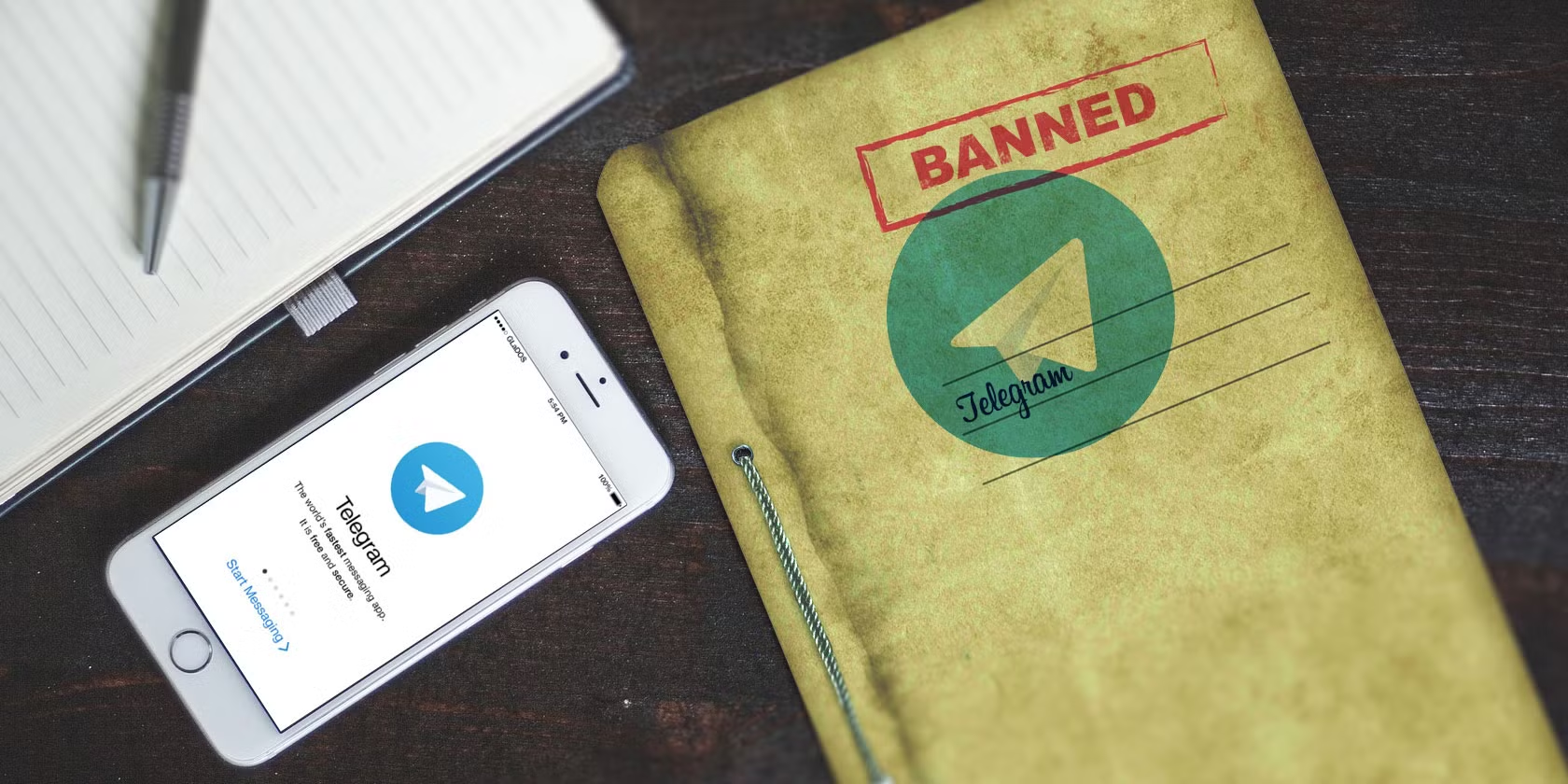
The Russian government’s decision to impose a ban on Telegram has significant implications for digital communication and freedom of expression within the country. Telegram, a popular messaging platform, has gained immense traction among users seeking privacy and security in their conversations. With increasing concerns over misinformation, state control of information, and the ongoing geopolitical tensions, the ban on Telegram has brought attention to the broader discourse on internet censorship and personal freedoms in Russia.
Details of the Ban
Authorities in Russia enacted the ban on Telegram as part of a broader initiative to regulate digital spaces, citing concerns over the app’s encrypted messaging features that hinder government monitoring. The move follows previous attempts to restrict access to various online platforms deemed unsatisfactory by the Kremlin.
According to reports, the Russian government has already implemented measures to block access to Telegram, with the Federal Service for Supervision of Communications, Technology and Mass Media (Roskomnadzor) announcing its strict stance against what it describes as non-compliance with Russian data regulations. Since the ban’s announcement, discussions surrounding the effectiveness and potential backlash from citizens have intensified.
Public Reaction and Consequences
The public response to the ban has been mixed, with many Telegram users expressing dissatisfaction and defiance. Protests have emerged in various city centers, reflecting public frustration with the government’s continued encroachments on personal freedoms. While some have opted to shift to alternative messaging platforms, others have employed virtual private networks (VPNs) to bypass restrictions, highlighting the resilience of digital communication among the populace.
Additionally, the ban raises concerns among businesses that rely on Telegram for communication, marketing, and customer engagement. It’s estimated that millions of people in Russia utilize the app, making it intrinsic to both personal and professional interactions in the digital age.
Conclusion
The recent Telegram ban in Russia serves as a critical event, epitomizing the ongoing struggle between governmental oversight and individual rights in the digital realm. As the political landscape continues to evolve, the future of Telegram and similar platforms remains uncertain, with the potential for further legislative actions against digital freedoms. Observers posit that the digital landscape in Russia may experience a significant shift in user behavior, leading to increased demand for more secure communication tools as Russians seek to navigate this challenging environment.