Introduction
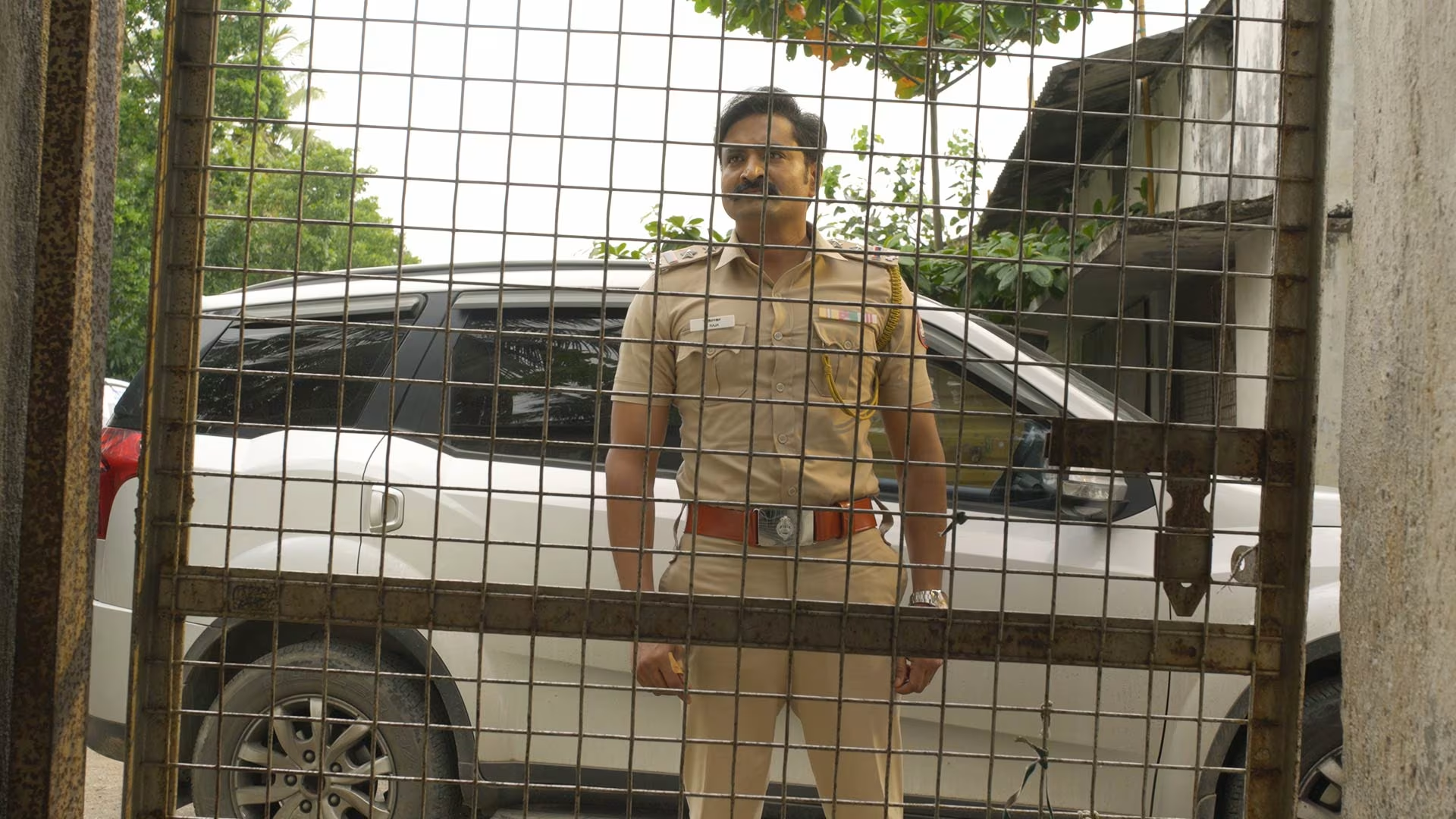
Police Bharti, or police recruitment, holds significant importance in maintaining the rule of law and public safety across India. With the rapidly evolving security landscape, the demand for skilled law enforcement officers has never been more critical. The recruitment of police personnel is essential for filling vacancies, modernizing police forces, and ensuring effective policing in both urban and rural set-ups.
Recent Developments
In recent months, various state police departments in India have announced new recruitment drives to bolster their forces. For instance, the Maharashtra Police has opened applications for over 9,000 constable positions, emphasizing the need for increased manpower to handle various public safety challenges. Similarly, the Uttar Pradesh Police has initiated the process for 4,000 new constables, highlighting their commitment to enhance police presence in communities.
Furthermore, many states are now implementing digital processes to streamline the recruitment of police personnel. Online applications, merit-based selection, and updated training modules are being embraced to attract a wider and more diverse candidate pool.
Challenges in Police Bharti
Despite these efforts, the recruitment process faces challenges such as ensuring transparency, addressing corruption, and maintaining strict eligibility criteria. Recent allegations of irregularities in the recruitment process have raised questions about fairness and efficacy. To counter these issues, several states are establishing oversight committees and utilizing technology to improve the integrity of the selection process.
Future Projections
As the necessity for police personnel continues to grow, it is anticipated that the trend of elevating recruitment standards will persist. With societal demand for responsible and ethically sound policing, the focus will likely shift towards not only filling vacancies but also enhancing the quality of training for new recruits. The integration of modern technology, such as data analytics and public feedback, may enhance the recruitment process further.
Conclusion
In summary, Police Bharti not only addresses the critical staffing needs of law enforcement agencies but also symbolizes the commitment of state governments towards public safety. As recruitment processes evolve, the emphasis on transparency, integrity, and inclusivity will be crucial in ensuring that future police forces are better equipped to serve and protect the communities they are responsible for. For job seekers and citizens alike, these developments signal a proactive approach to law enforcement and a brighter future for public safety in India.