Introduction
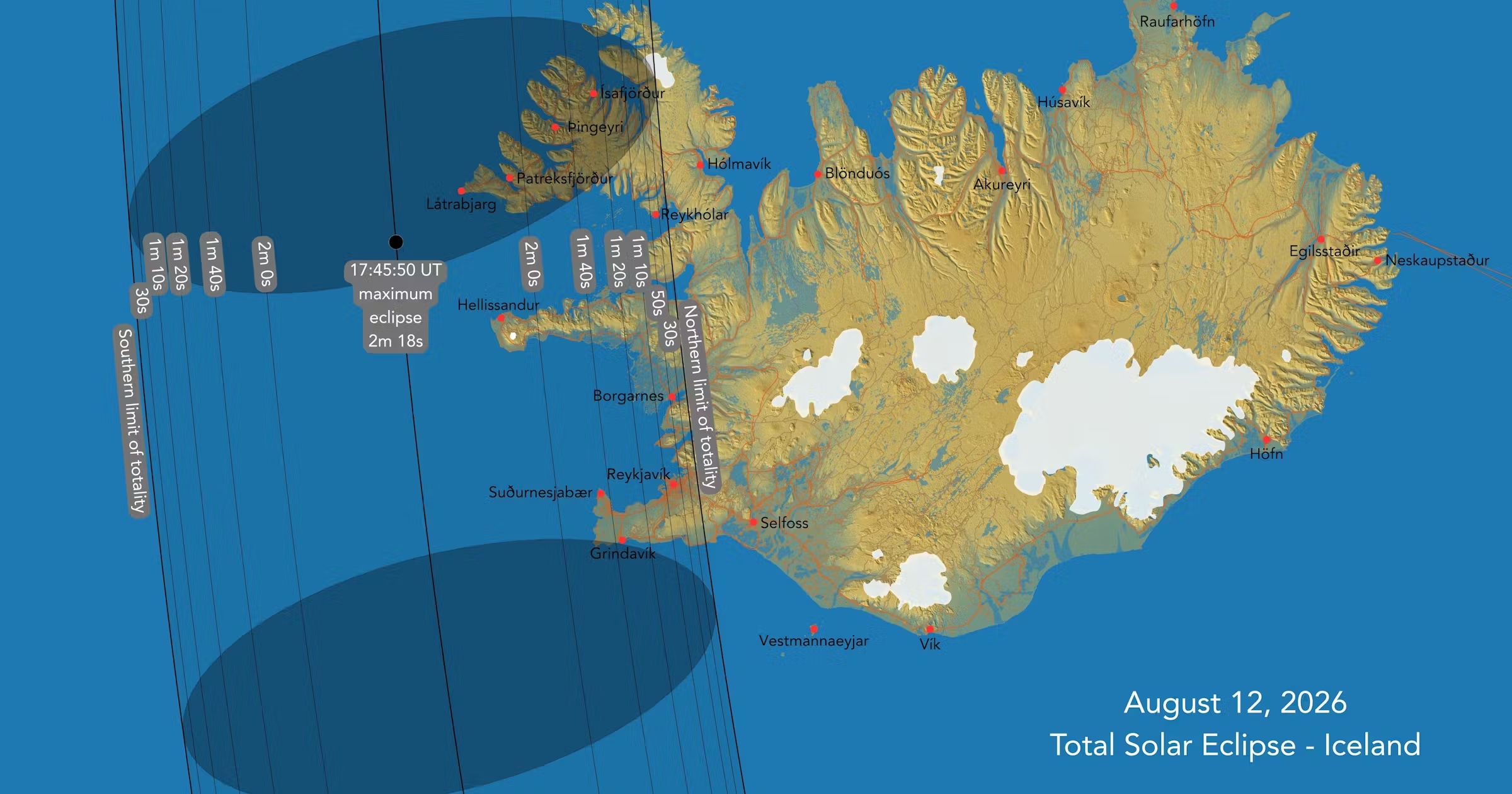
The solar eclipse of 2026 is set to be a remarkable celestial event that captures the attention of sky-gazers and science enthusiasts alike. Occurring on August 12, 2026, this total solar eclipse will traverse parts of the Arctic, Greenland, Iceland, and Spain, marking a significant occasion for both local populations and travelers seeking a unique viewing experience. Understanding the trajectory, significance, and preparations for this event is paramount for those wishing to witness this astronomical phenomenon.
Details of the Eclipse
The 2026 solar eclipse will reach its maximum visibility in the northern Atlantic Ocean, where the path of totality will be 140 kilometers wide. Cities including A Coruña and Zaragoza in Spain will experience totality, allowing viewers there to observe the moon completely covering the sun for up to 2 minutes and 32 seconds. The event will start as a partial eclipse before reaching totality and gradually returning to a partial phase. The last total solar eclipse visible from mainland Spain was in 1997, making this upcoming event particularly special for Spanish residents and tourists alike.
Significance and Forecast
Total solar eclipses are rare occurrences that have fascinated humanity for centuries, stirring interest in various fields such as astronomy, folklore, and even mythology. Scientifically, they provide a unique opportunity for researchers to study the sun’s corona, which is otherwise obscured by the sun’s brightness. A total solar eclipse stimulates educational outreach efforts in astronomy, encouraging deeper public engagement with science and the cosmos.
Preparations for Viewing
<pFor optimal viewing, it is essential for enthusiasts to prepare in advance. This includes finding a suitable location within the path of totality, securing accommodations well in advance due to expected tourist influx, and investing in proper eye protection to safely observe the event. Many communities along the path will likely host viewing events and educational programs to enrich the experience.
Conclusion
The solar eclipse of 2026 is not just a celestial event; it is a celebration of science, humanity’s quest for knowledge, and global connection as people from different backgrounds come together to witness a shared phenomenon. As the date approaches, it is crucial to stay informed about preparation and viewing strategies to enjoy the show of nature at its finest.