Introduction
The West Bengal Council of Higher Secondary Education (WBCHSE) plays a critical role in the state’s education framework. Established in 1975, it oversees the education and examination of higher secondary students in West Bengal, making it a vital institution for students advancing toward higher education and career opportunities.
Significance of WBCHSE
WBCHSE is responsible for regulating and conducting the higher secondary examination for students in West Bengal. The board currently manages over 2,000 institutions with approximately 7-8 lakh students appearing for the exams annually. The council ensures that the curriculum is updated in line with national educational standards and oversees the publication of textbooks. Recently, WBCHSE announced several initiatives aimed at enhancing digital learning resources and simplifying examination processes, particularly in response to challenges posed by the COVID-19 pandemic.
Recent Developments
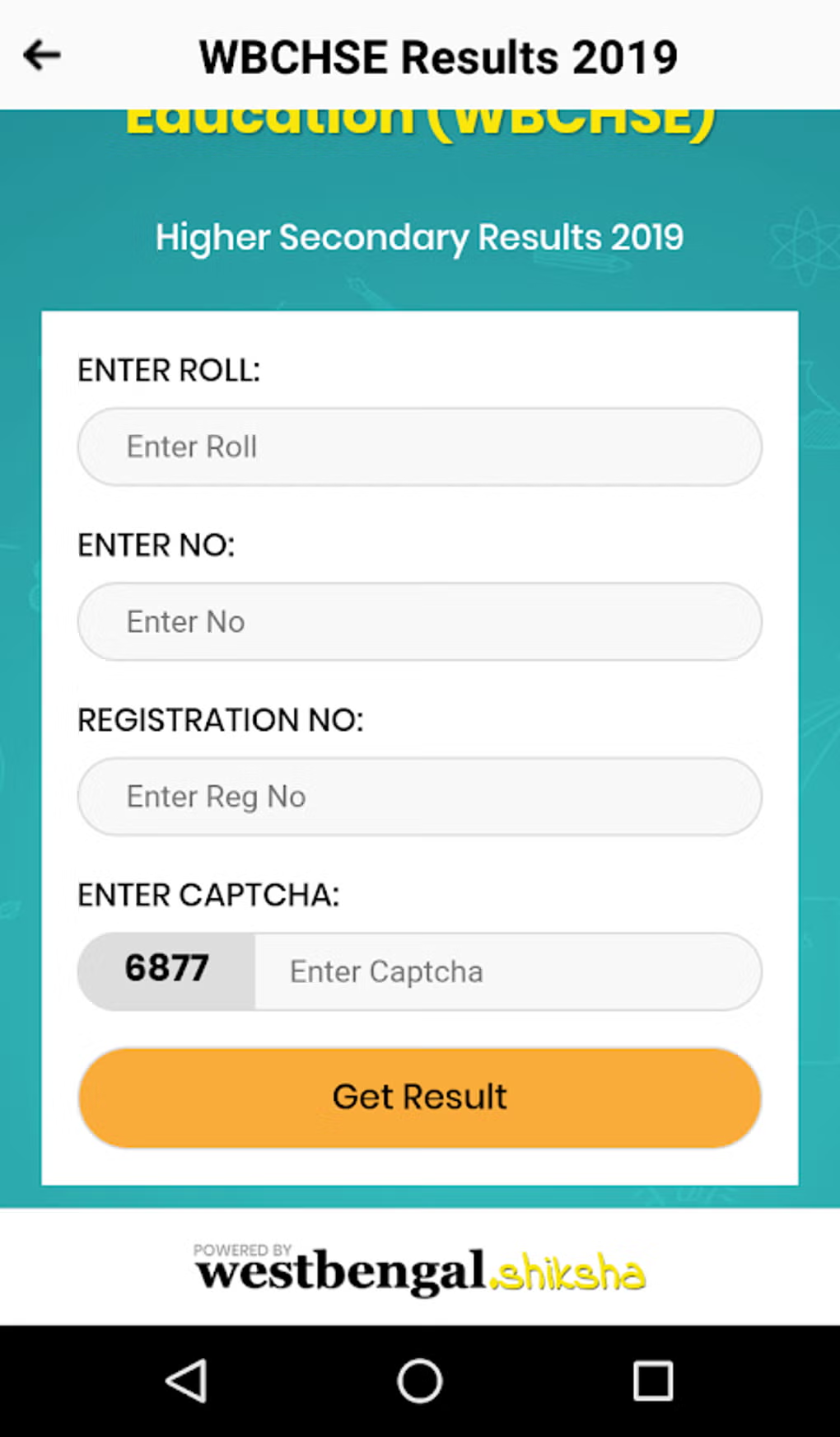
On August 29, 2023, WBCHSE released the results for the higher secondary examinations conducted earlier in the year. The pass percentage saw a slight increase, with 92.35% of candidates successfully completing their examinations. This marks a positive trend compared to the previous year, which recorded a pass percentage of 90.12%. Furthermore, the council announced that they would be implementing an innovative online platform to offer mock tests and other preparatory materials to aid students in their studies. This platform is aimed at increasing student engagement and improving performance in board examinations.
Conclusion
The efforts of WBCHSE to modernize educational delivery and support student success are crucial for the future of higher secondary education in West Bengal. As the council continues to adapt to the demands of modern education, it is expected to play an even more significant role in shaping the academic and professional futures of students. The focus on digital initiatives and examination reforms suggests that WBCHSE is committed not only to quality education but also to ensuring that students are well-prepared for the challenges ahead.