Understanding the Chandra Grahan Timings Today
The anticipation surrounding lunar eclipses has always been significant, particularly in India, where cultural and astronomical interests converge. Historically, lunar eclipses have been viewed with a mix of reverence and caution, with many communities observing rituals and practices during these celestial events. The expectation for the Chandra Grahan on March 3, 2026, has been building, especially as it coincides with the vibrant festival of Holi.
Key Timings of the Lunar Eclipse
As the date approaches, the specific timings for the various phases of the Chandra Grahan have been confirmed. The Sutak Kaal, a period of preparation and abstention, will commence at 6:20 AM on March 3, 2026. This is followed by the penumbral phase of the eclipse, which begins at 2:14 PM. The partial eclipse will start at 3:30 PM, leading into totality at 4:58 PM. The maximum eclipse will occur at 5:25 PM, with totality concluding at 5:32 PM. The partial eclipse will end at 6:47 PM, and the penumbral phase will conclude at 7:53 PM.
Immediate Effects on Observers
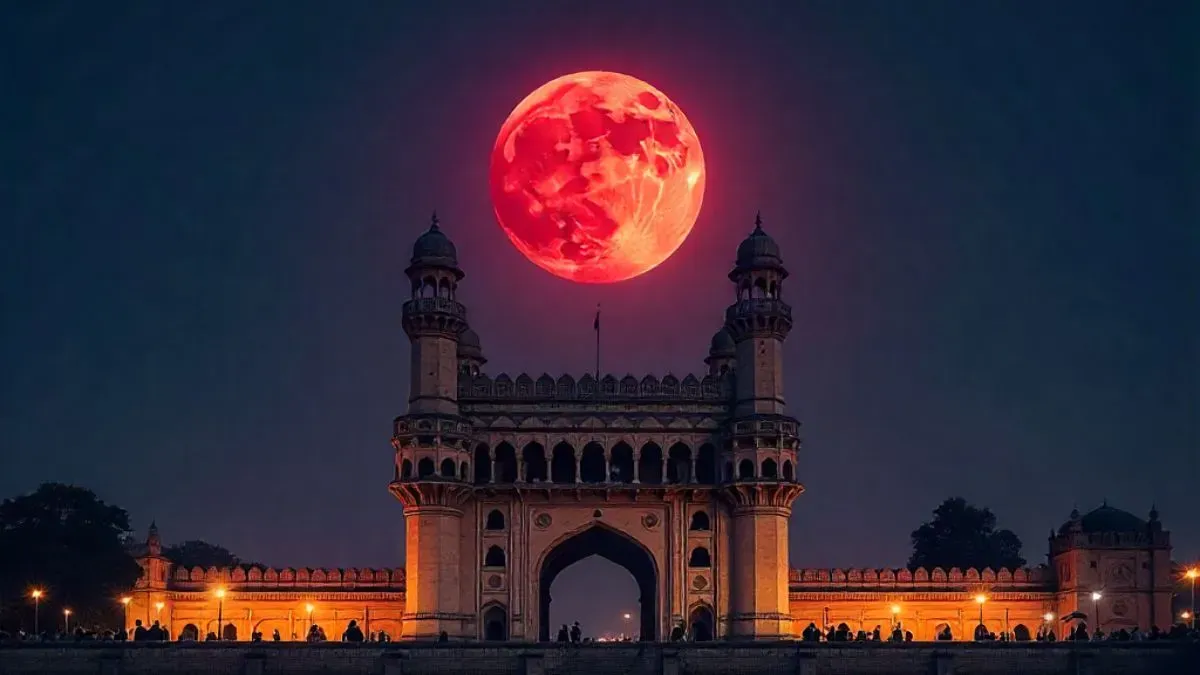
The timing of the Chandra Grahan is particularly significant for observers in northeastern states of India, where the view of the eclipse is expected to be most dramatic. The phenomenon, often referred to as a Blood Moon during totality, may see the Moon take on a copper-red hue, captivating those who witness it. This visual spectacle is likely to draw both casual observers and serious astronomers alike, eager to experience the celestial event.
Expert Perspectives on the Eclipse
Experts in astronomy emphasize the importance of such events not only for their aesthetic value but also for the scientific insights they provide. A lunar eclipse occurs when Earth moves between the Sun and the Moon, casting its shadow on the Moon. This natural occurrence allows scientists to study the Earth’s atmosphere and the Moon’s surface, enhancing our understanding of both celestial bodies.
Cultural Significance During Holi
The coincidence of the Chandra Grahan with Holi adds a layer of cultural significance to the event. Many communities will likely incorporate traditional practices and rituals associated with both the lunar eclipse and the festival of colors. This intersection of science and culture highlights the diverse ways in which celestial events are interpreted and celebrated across different societies.
Looking Ahead
As the date of the Chandra Grahan approaches, preparations are underway for both viewing and celebrating this unique event. Astronomical societies and local communities are likely to organize gatherings, discussions, and viewing parties to engage the public in this celestial phenomenon. The excitement surrounding the eclipse serves as a reminder of our connection to the cosmos and the natural world.
With the Chandra Grahan set to take place on March 3, 2026, the confirmed timings offer a clear schedule for observers. As the event draws near, both the scientific community and the general public are poised to engage with this extraordinary display of nature, blending tradition with modern understanding. Details remain unconfirmed regarding specific local events, but the anticipation continues to grow.