How is Amul’s cooperative model impacting rural economies in Odisha?
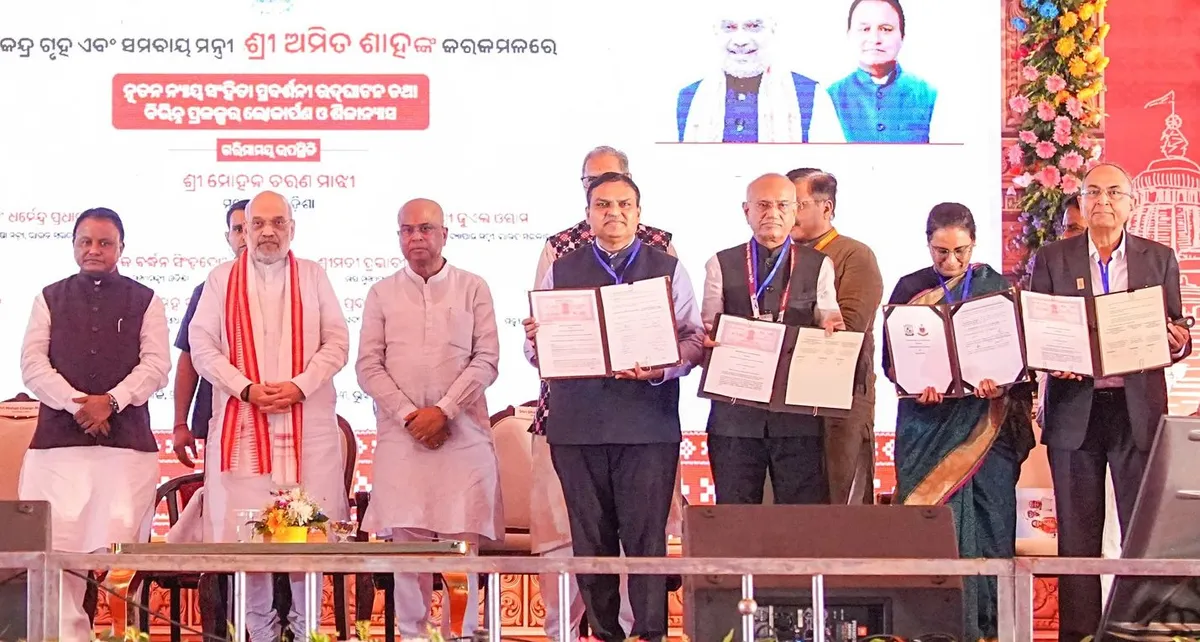
The recent inauguration of development projects in Odisha by Union Home Minister Amit Shah raises an important question: How will the Amul-style cooperative model transform rural economies in the region? The answer lies in the government’s commitment to establishing dairy cooperatives across villages, which aims to create sustainable income opportunities for farmers and rural households, particularly women.
On March 7, 2026, Amit Shah inaugurated and laid foundation stones for development projects worth more than Rs 3,770 crore in Odisha. These projects include initiatives from the National Dairy Development Board (NDDB) and the Odisha State Cooperative Milk Producers’ Federation (OMFED). Shah emphasized the cooperative sector’s role in transforming rural economies, stating that expanding dairy cooperatives would significantly benefit local communities.
Shah highlighted the success of Amul, which conducts business worth Rs 1.3 lakh crore, benefiting approximately 3.6 million rural women involved in its operations. This model not only supports dairy farmers but also empowers women cattle herders in Gujarat, showcasing the potential for similar success in Odisha.
In addition to the dairy initiatives, a new sulphuric acid stream was inaugurated at the Indian Farmers Fertiliser Cooperative Limited (IFFCO) unit in Paradeep, further supporting the cooperative framework in the region. Shah’s remarks underline the government’s focus on creating a robust cooperative ecosystem to uplift rural economies.
Union Minister of State for Fisheries, Animal Husbandry and Dairying George Kurian expressed support for transforming Kerala’s MatsyaFed into a national cooperative model akin to Amul. He stated, “If the Kerala government proposes a comprehensive development plan, the Centre would extend financial and technical support to scale up MatsyaFed into a nationwide cooperative framework.” This indicates a broader vision for cooperative models across India.
The cooperative sector has historically played a transformative role in strengthening rural and sectoral economies in India. The government’s initiatives in Odisha are a continuation of this legacy, aiming to replicate Amul’s success in empowering local farmers and enhancing their livelihoods.
As the government moves forward with these projects, details remain unconfirmed regarding the specific timelines and implementation strategies. However, the commitment to fostering a cooperative model in Odisha is clear, and the potential benefits for rural communities are significant.
In conclusion, the introduction of the Amul-style cooperative model in Odisha represents a strategic effort to uplift rural economies and empower local farmers, particularly women, through sustainable income opportunities.