Prior Expectations for TCS
Before the recent downturn, Tata Consultancy Services (TCS) was regarded as a strong player in the Computers – Software & Consulting sector, boasting a market capitalization of Rs.8,91,913 crores. Investors had high expectations for the company, especially given its average Return on Equity (ROE) of 43.49% and a consistent dividend yield of 4.42%. The stock was perceived as a reliable investment, with many institutional investors holding 23.25% of its shares, reflecting confidence in its long-term growth potential.
Decisive Moment and Immediate Numbers
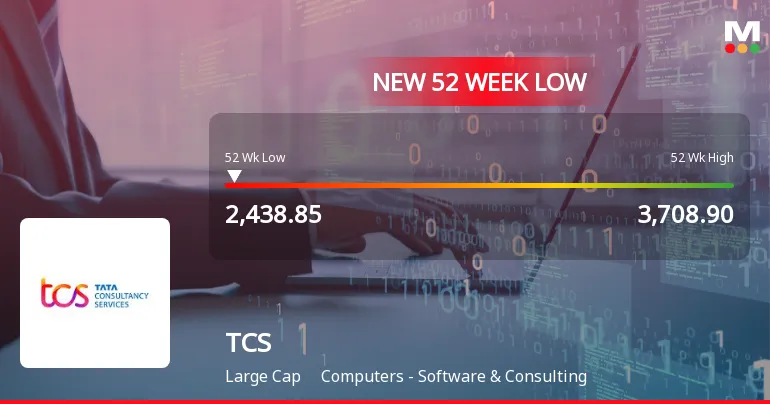
However, a decisive shift occurred on March 12, 2026, when TCS’s share price plummeted to Rs.2440, marking its lowest level in the past year. This decline was part of a broader trend, as the stock experienced a continuous nine-day drop, resulting in a total loss of 7.79% in value. The bearish sentiment was mirrored in the overall market, with the Sensex closing down by 269.05 points at 76,100.60, a decline of 0.99%. The stock’s performance indicated it was trading below all key moving averages, a clear sign of market pessimism.
Direct Effects on TCS and Investors
The immediate effects of this decline have been significant for TCS and its investors. The stock’s value has generated a return of -30.08% over the past year, raising concerns among shareholders about the company’s future performance. The decline in quarterly earnings per share (EPS) to Rs.29.44 further exacerbates these concerns, as it signals potential challenges in maintaining profitability. Investors are now faced with uncertainty regarding the company’s ability to recover from this downturn, leading to increased scrutiny of TCS’s operational strategies and market positioning.
Expert Perspectives on the Shift
Market analysts have weighed in on the situation, emphasizing the importance of understanding the broader economic context. The decline in TCS’s stock price is not an isolated incident but rather part of a larger trend affecting many companies within the technology sector. Experts point out that while TCS maintains a strong financial foundation, including an average debt-to-equity ratio of zero and a healthy debtor turnover ratio of 4.76 times, external market pressures can significantly impact stock performance. This perspective highlights the need for investors to remain vigilant and consider both internal and external factors when evaluating TCS’s future prospects.
Contextualizing the Current Situation
Despite the current challenges, TCS’s historical performance and strong fundamentals provide a basis for potential recovery. The company’s established position in the market, combined with its robust financial metrics, suggests that it may be able to navigate through this turbulent period. However, the ongoing bearish trend raises questions about how quickly TCS can adapt to changing market conditions and regain investor confidence.
Looking Ahead
As TCS grapples with this decline, the focus will be on its strategic responses to the current market environment. Investors will be closely monitoring any announcements regarding operational adjustments, cost management, and growth initiatives that could signal a turnaround. The coming weeks will be critical for TCS as it seeks to stabilize its stock performance and reassure its stakeholders of its long-term viability.
In summary, TCS’s recent stock decline reflects a complex interplay of market dynamics and investor sentiment. While the company has historically demonstrated resilience, the current bearish trend poses significant challenges that will require careful navigation. Details remain unconfirmed regarding the specific strategies TCS may implement to address these issues, but the focus on recovery will be paramount in the months ahead.