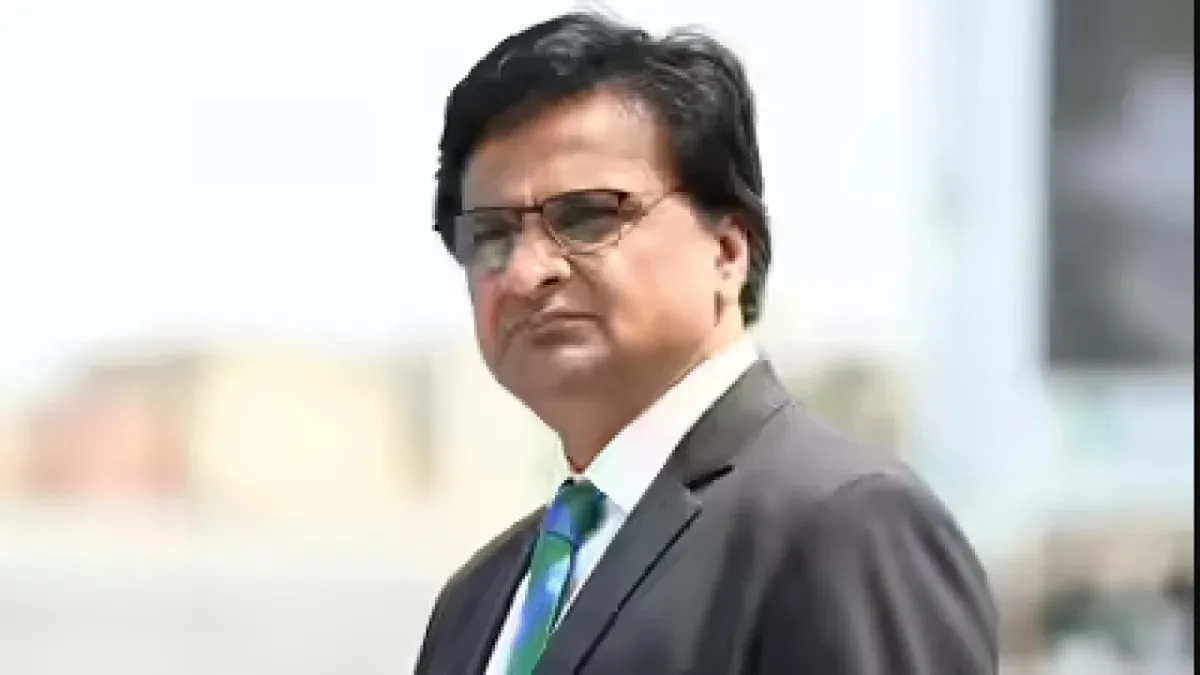
Former India pacer and current ICC match referee Javagal Srinath has stated that he would have banned Sourav Ganguly for a few matches over the controversial toss delay during the 2001 Border-Gavaskar Trophy at Eden Gardens. The incident involved Ganguly making Australia captain Steve Waugh wait for the toss, an act widely perceived as gamesmanship.
Speaking at a recent event in Chennai, Srinath reflected on the incident, which occurred during a historic series that India ultimately won 2-1. He emphasised the importance of discipline and adherence to rules, regardless of the player involved. Srinath was quoted saying, “If I were the match referee, I would have banned Sourav for a couple of matches.”
The delay in 2001 has been viewed by many as a psychological tactic that unsettled Waugh and the Australian team. Ganguly later attributed the delay to his inability to find his blazer, though Srinath suggested this explanation is debatable. The actual match referee for that Eden Test was Cammie Smith from the West Indies. Srinath‘s comments have reignited discussions among cricket fans about the memorable match and Ganguly‘s captaincy.
Ganguly’s Leadership and Team Transformation
Despite his strong stance on the toss incident, Srinath also offered significant praise for Ganguly‘s leadership qualities during his tenure as India captain. He highlighted Ganguly‘s exceptional ability to identify and develop young talent, who would later become crucial players for India. Srinath specifically credited Ganguly for nurturing cricketers such as Yuvraj Singh, Harbhajan Singh, and Virender Sehwag, who went on to achieve considerable success for the Indian team in subsequent years.
Srinath also provided insights into the broader context of Indian cricket during that period, noting a significant transformation following the match-fixing controversies of the late 1990s. He observed that players across the team developed a shared determination to restore the integrity of cricket. There was a collective resolve to demonstrate to the world that the game remained clean and untainted.
In Srinath‘s words, “There was a bit of a resoluteness in each and every player to really put that image back and then prove to the world that cricket is superior, cricket is clean.” He added that effective leadership from the top four or five players, who were aligned in their vision, helped India not only achieve consistent victories at home but also improve their performance in overseas matches.
Srinath recalled that between 1991 and 1997-98, India‘s overseas win record was quite poor, but this trend began to change significantly from 1999 onwards. This period marked a turning point for Indian cricket, with a renewed focus on team unity and performance.
Recollections and Future Talent
Srinath also shared a memory from the 2003 World Cup final against Australia. He revealed that during team discussions, he had advocated for batting first if India won the toss, aiming to set a large target and pressure the opposition. However, Ganguly made a different decision, and the team followed his call. The powerful Australian side ultimately won that final.
He further recounted an instance of supporting young talent, specifically regarding Zaheer Khan‘s entry into the national team. After observing Zaheer take six wickets for the MRF Pace Foundation against Air India, Srinath recommended him to then-national selector Chandu Borde. When Borde jokingly questioned what would happen to Srinath‘s own place if Zaheer was selected, Srinath‘s response was direct: “If he’s good, he replaces me.”
Srinath, who remains one of the most complete pacers Indian cricket has produced, continues to offer his perspectives on the game. His recent comments have once again brought to light significant moments and personalities from a transformative era in Indian cricket history.
He also expressed thoughts on the current state of cricket, calling for a better balance between bat and ball. Srinath pointed to factors such as shorter boundaries, larger bats, and less pronounced seams as elements that have shifted the game’s equilibrium. He emphasised that “Something needs to be done to bring some balance into this game.”
Additionally, Srinath cautioned against comparing young talent like Vaibhav Sooryavanshi to legends such as Sachin Tendulkar and Virat Kohli. He stressed that different eras present different challenges for players. Srinath stated that when judging a player, both white-ball and red-ball cricket should be considered. He acknowledged Sooryavanshi as a wonderful talent, noting his youth, and expressed hope that he develops the maturity seen in Sachin and the strong mindset of Virat.
These reflections from Javagal Srinath provide a detailed look into pivotal moments and discussions that shaped Indian cricket, from controversial on-field decisions to the development of future stars and the broader evolution of the sport’s integrity.
Source: yardbarker.com