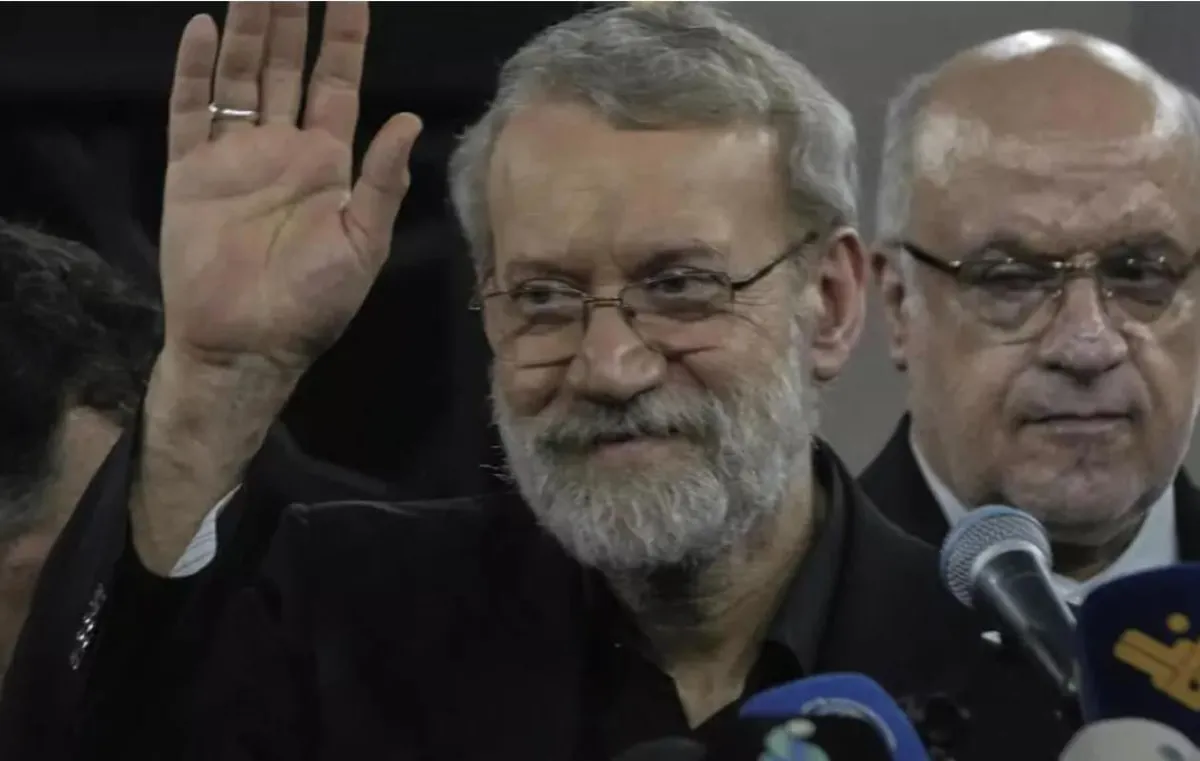
Ali Larijani, the Secretary of the Supreme National Security Council of Iran, is under intense scrutiny as skepticism grows about his political influence. Having resumed this role for the second time in August 2025, Larijani’s past positions as Minister and Speaker of Parliament, along with his multiple presidential candidacies, have established him as a significant figure in Iranian politics.
Despite his experience, observers like Azadeh Kian express doubts about Larijani’s authority, stating, “It is not obvious that his orders will actually be followed, particularly by the Revolutionary Guards, who are a state within a state.” This raises questions about the effectiveness of his leadership amid Iran’s complex political landscape.
Larijani is often viewed as a pragmatic conservative by Western powers, which could be a double-edged sword. While his negotiating skills have been utilized in discussions with Western nations, his reputation among Iranians is far less favorable. Political scientist Mahnaz Shirali has gone so far as to claim that Larijani is “hated by Iranians and is a criminal against humanity,” highlighting the deep divisions in public opinion.
As Larijani navigates these turbulent waters, the potential for his political weight to facilitate a departure from the current regime is a topic of debate. Observers note that while he may play a role in negotiations, he is unlikely to embody the future of Iranian power.
Further complicating his position, Kian warns, “If the Americans or the Israelis wanted to eliminate him, he would be eliminated like the others,” suggesting that Larijani’s safety and political future are precarious. The Revolutionary Guards’ loyalty remains uncertain, adding another layer of complexity to his leadership.
Details remain unconfirmed regarding the extent of Larijani’s influence moving forward, but the political landscape in Iran continues to evolve rapidly. As the situation develops, Larijani’s ability to assert authority will be closely monitored by both domestic and international observers.