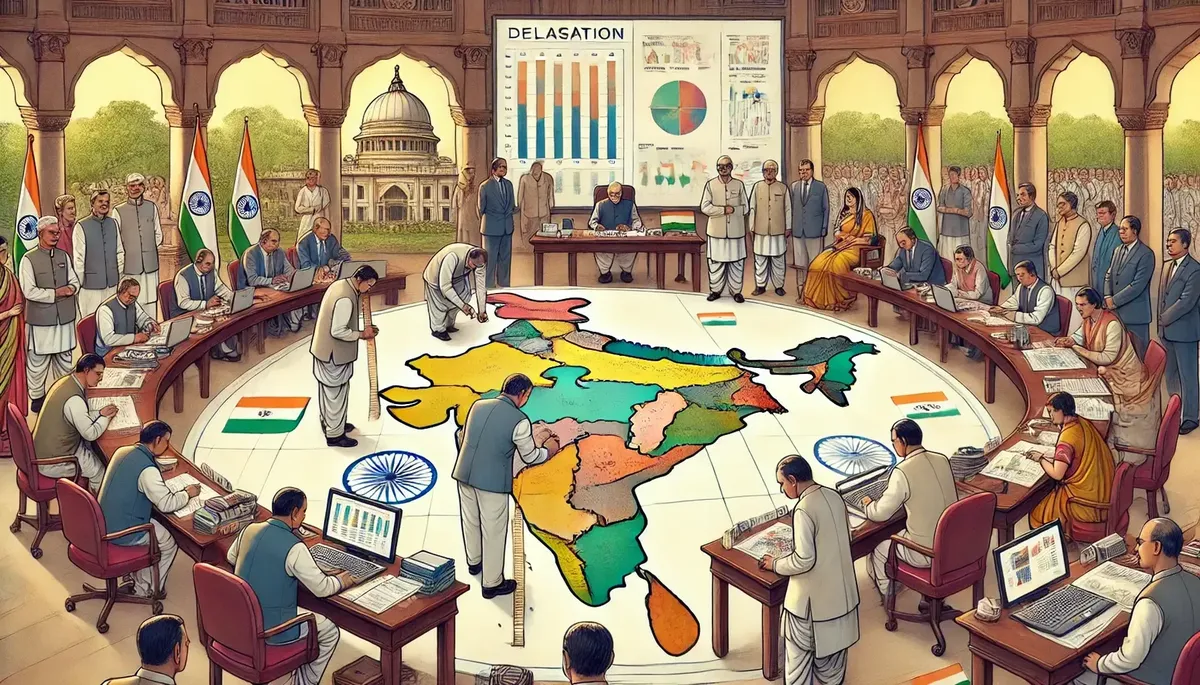
As the political landscape in India evolves, the Union Government is poised to introduce a crucial delimitation bill during the Special Session of Parliament on April 16 and 17, 2026. This bill proposes a significant increase in the strength of the Lok Sabha, raising the number of members from the current 543 to an ambitious 850. This move is seen as a pivotal step towards reshaping the electoral framework in the country.
The proposed amendment seeks to eliminate the requirement that delimitation must follow the post-2026 Census, a change that could expedite the reconfiguration of constituencies. Currently, the composition of the Lok Sabha is based on the 1971 Census, and the existing boundaries have been frozen since the 84th Amendment Act of 2001, which mandates that constituency boundaries remain unchanged until the first census after 2026.
The bill aims to amend Article 82 of the Constitution, which governs the process of readjustment of parliamentary constituencies following each Census. By empowering the Central Government to constitute a Delimitation Commission, the bill allows for a more flexible approach to constituency boundaries. The Commission will be chaired by a person who is or has been a Judge of the Supreme Court, ensuring a level of judicial oversight in the process.
Under the proposed changes, Article 81 will also be amended to allow for a maximum of 815 members from the states and 35 from Union Territories. This restructuring is expected to enhance representation in the Lok Sabha, particularly as the population dynamics of various regions shift over time.
Notably, the bill includes a provision for 33% reservation for women in the Lok Sabha and State Assemblies, a move that advocates argue is essential for ensuring gender parity in Indian politics. This reservation is a significant step towards empowering women and increasing their participation in governance.
The urgency of this bill is underscored by the fact that the latest published census was conducted in 2011, with the next census expected to conclude in 2027. The current allocation of seats is based on population figures from the 1971 census, while the present division of territorial constituencies relies on the 2001 census. This discrepancy highlights the pressing need for a re-evaluation of constituency boundaries to reflect current demographics.
Furthermore, the bill stipulates that orders issued by the Delimitation Commission, once published in the Gazette of India, will have the force of law and cannot be challenged in any court. This provision raises questions about the checks and balances in the delimitation process and the potential implications for electoral fairness.
As the government prepares to present this bill, the implications for future elections and political representation are profound. The proposed changes could redefine the electoral map of India, influencing the balance of power in the Lok Sabha and impacting millions of voters across the country. Stakeholders are closely watching these developments, as the outcome will significantly shape the political landscape in the years to come.