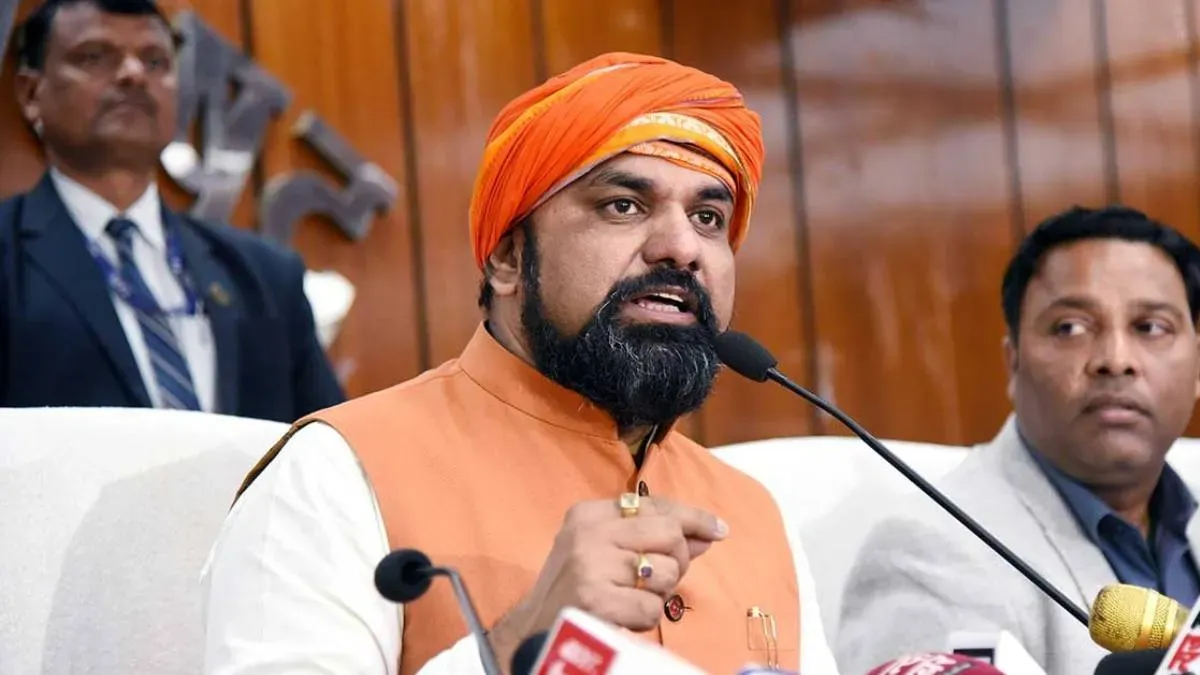
What does Samrat Chaudhary’s ascension to the Chief Ministership of Bihar mean for the state’s political landscape? It signifies a historic shift, as Chaudhary is set to become the first Chief Minister from the Bharatiya Janata Party (BJP) after Nitish Kumar’s resignation, which ended his over two-decade tenure.
Chaudhary’s rise comes after a significant political reshuffle in Bihar, where he previously served as Deputy Chief Minister. His nomination was proposed by Deputy Chief Minister Vijay Sinha and endorsed by Union Minister Shivraj Singh Chouhan, highlighting the BJP’s strategic maneuvering within the state’s political framework. Chaudhary expressed gratitude for the opportunity, stating, “This is not merely a position for me, but a sacred opportunity to serve the people of Bihar, to fulfil their trust and dreams.”
Born on November 16, 1968, Chaudhary has been a prominent figure in Bihar’s political scene for over three decades. He joined the BJP in 2018 and became the state president in 2023, leading the party to secure 74 seats in the 2020 assembly elections. His political journey began in 1999 when he was sworn in as the Minister of Agriculture in the RJD-led Bihar government, marking his first major breakthrough.
Chaudhary’s background is notable as he belongs to the Koeri-Kushwaha caste, which constitutes 4.2% of Bihar’s population. This demographic factor may play a crucial role in his governance and outreach strategies as he aims to unite various factions within the state. His commitment to the people is evident in his pledge: “I pledge to live up to the expectations of one and all with complete dedication, commitment, and integrity.”
The oath-taking ceremony for Samrat Chaudhary is scheduled for April 15, 2026, and it is expected to draw significant attention from political analysts and the public alike. As he steps into this pivotal role, the implications of his leadership will be closely monitored, especially in light of the BJP’s recent electoral successes in Bihar.
With Chaudhary at the helm, the BJP aims to consolidate its power in Bihar and further its agenda within the National Democratic Alliance (NDA). However, the political landscape remains fluid, and the challenges ahead are substantial, including addressing the needs of a diverse population and managing inter-party dynamics.
As the state prepares for this transition, many questions linger regarding the direction of Bihar’s governance under Chaudhary’s leadership. Will he maintain the momentum established by his predecessor, or will he chart a new course? Details remain unconfirmed, but the eyes of the nation will undoubtedly be on Bihar as it enters this new chapter in its political history.