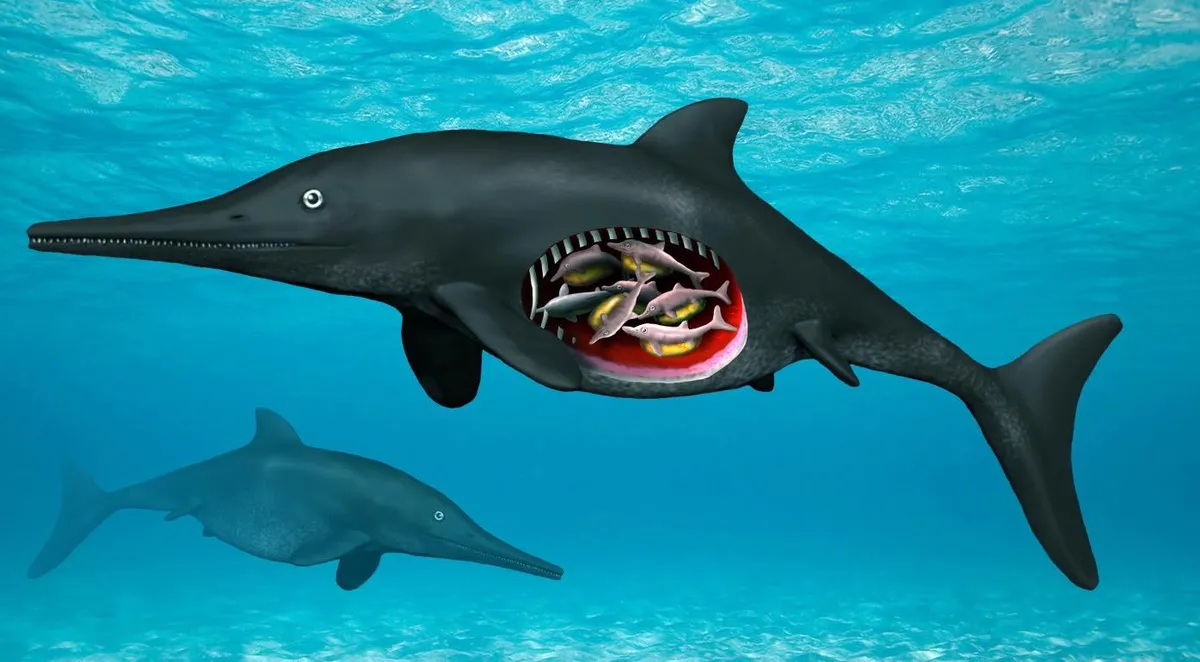
Researchers in Germany have uncovered a 180 million year old ichthyosaur fossil, revealing how an injured marine reptile survived against the odds. The fossil, belonging to the Temnodontosaurus genus, provides new insights into Jurassic sea life.
This remarkable specimen shows evidence of severe jaw injuries sustained by the ichthyosaur. It suggests that these ancient marine predators could endure significant physical challenges.
The ichthyosaur could grow over 20 feet (around 6.5 metres) long, similar in appearance to modern dolphins. Researchers discovered fragments of its skull, lower jaw, shoulder girdle, forefins, spine, and over 100 teeth.
The fossil was found in the Mistelgau clay pit near Bayreuth, a site known for its well-preserved marine fossils. This discovery suggests that ichthyosaurs survived longer than previously believed.
Initial reactions from paleontologists indicate that this find is significant for understanding ancient marine life. The evidence of injuries and adaptations highlights the resilience of these creatures.
As experts continue to analyze the fossil, they hope to learn more about the lifestyle and survival strategies of ichthyosaurs. This discovery could reshape current theories in paleontology regarding these ancient reptiles.